The Science Behind Ketamine: Unraveling its Impact on the Brain
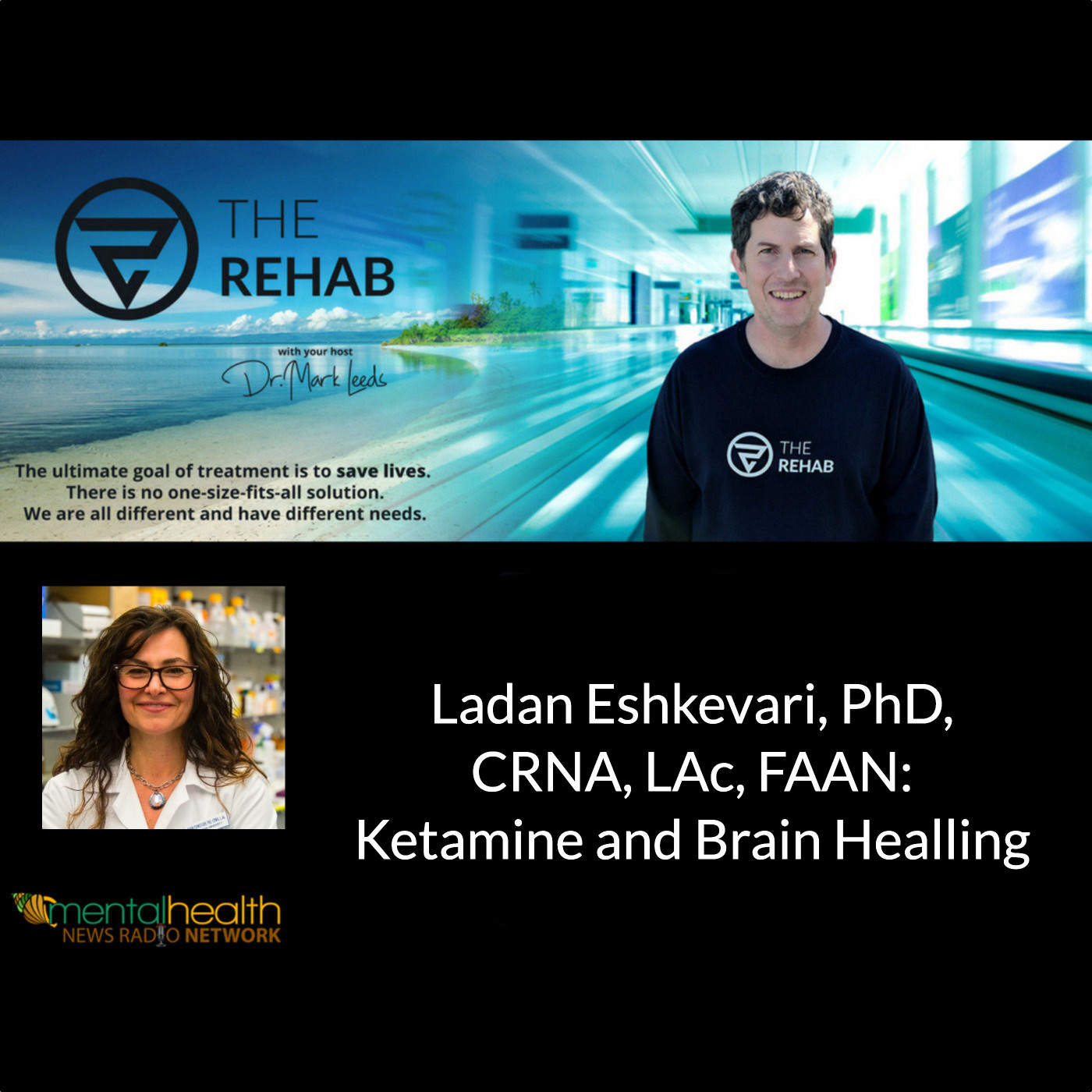
We are pleased to present an intriguing interview, featuring Ladan Eshkevari, PhD, CRNA, LAc, FAAN, cofounder and CEO of Avesta Ketamine. This episode is also available on The Ketamine Podcast and The Benzodiazepine Podcast. The Rehab, The Ketamine Podcast, and The Benzodiazepine Podcast are all carried on the following podcast platforms: Apple Podcasts, Google Podcasts, Spotify Podcasts, Podchaser, Podcast Addict, Player FM, Listen Notes, The Podcast Index, Deezer, Castro, Pocket Casts, Overcast, Amazon Music, and Stitcher.
Dr. Eshkevari’s journey began at Georgetown University, where she dedicated herself to teaching graduate students about the intricacies of anesthetic drugs. Over the years, she became increasingly intrigued by the surging research results pointing to the antidepressant effects of ketamine. “The way ketamine interacts with the brain is profoundly distinct from traditional antidepressants,” Dr. Eshkevari notes.
Ketamine is proving to be highly effective for treating a wide range of mental health conditions and pain syndromes. Ketamine infusion therapy offers hope for patients suffering from conditions such as depression, anxiety, addiction, suicidality, PTSD, OCD, bipolar disorder, migraines, addiction, chronic pain, neuropathic pain, chronic lyme disease, fibromyalgia, CRPS, and possibly many other conditions that were previously not easily managed with other therapies, including benzodiazepine protracted withdrawal symptoms.
Ketamine’s primary mechanism revolves around the NMDA receptor in the brain. When delving into how does ketamine work in the brain, it’s essential to understand its impact on these receptors. Ketamine acts by inhibiting the NMDA receptor’s activity, leading to an upsurge in the activity of another vital receptor: the AMPA receptor. This shift in brain wave activity prompts an increase in the protein synthesis crucial for dendrite growth and function in nerve cells, thereby enhancing neural connectivity.
In addition, ketamine modulates the glutamate receptor, which plays a significant role in mood disorders and chronic stress. While traditional antidepressants typically focus on serotonin or norepinephrine pathways, ketamine’s effect on the glutamate system offers a novel approach to depression treatment.
Read more : Dr. Steven Reichbach Discusses Ketamine Infusion Therapy for Suicidality
Addressing the Concerns and Hopes
Like any medical treatment, ketamine therapy is not devoid of bureaucracy and challenges. From the rigorous FDA approvals to the painstaking perusal of drug package inserts, ensuring patient safety remains paramount. Dr. Eshkevari emphasizes the importance of disclosure and understanding the potential adverse effects.
The rise of ketamine infusion therapy, especially in a clinical setting, has garnered attention from various corners, including Yale Medicine and other premier institutions. While some patients experience dissociative effects or issues related to the respiratory system, the benefits, for many, outweigh the risks. As with any treatment, it’s crucial to adopt a ‘whole patient’ approach. Beyond the infusion therapy, the integration of cognitive behavioral therapy, diet modifications, and even complementary treatments like acupuncture can offer more comprehensive care.
Dr. Eshkevari also highlights the need for ongoing therapy, asserting that while ketamine can provide rapid relief, it isn’t a “quick fix.” The treatment of mental illness, especially conditions like treatment-resistant depression, requires a multifaceted approach. This perspective resonates with the findings from animal studies, where stressed-out mice showed improved symptoms when treated with ketamine, suggesting its potential anti-inflammatory effects.
A Multidisciplinary Approach
Intriguingly, Dr. Eshkevari’s background also includes expertise in Chinese medicine. She notes the importance of understanding meridians and chi, emphasizing the value acupuncturists bring by targeting master points, such as the “4 gates,” to alleviate depressive symptoms.
“Combination therapies are the future,” Dr. Eshkevari predicts, drawing parallels with the success of treatments for other conditions like Lyme disease, where addressing chronic symptoms often requires a multi-pronged approach.
As mental health conditions continue to challenge our global community, the work of professionals like Dr. Ladan Eshkevari, PhD, CRNA, LAc, FAAN, and institutions like Avesta Ketamine clinic provides a beacon of hope. With her unwavering commitment and pioneering vision, Dr. Eshkevari stands at the forefront of revolutionizing mental health care.
In the realm of advanced medical therapies, another beacon of hope emerges: ketamine infusion therapy. Historically known for its anesthetic properties, ketamine is now breaking new ground in the treatment of a spectrum of previously challenging conditions. As modern medicine progresses, the emphasis on innovative therapies that address the root causes and unique manifestations of individual ailments has become paramount. Ketamine infusion therapy stands as a testament to this evolution.
Ketamine offers hope to people who suffer from conditions that have not responded well to traditional therapies.
Depression, anxiety, PTSD, and OCD – conditions that not only affect the individual’s mental state but also have cascading effects on their overall well-being – often prove resistant to conventional treatments. In these instances, ketamine has shown remarkable efficacy. By acting on NMDA receptors in the brain, ketamine can potentially reset neural pathways, offering rapid relief, often within hours, from debilitating symptoms.
Furthermore, its benefits aren’t limited to mental health. Conditions like migraines, chronic pain, neuropathic pain, and fibromyalgia, which can impair daily functionality and reduce the quality of life, are also seeing promising results with ketamine infusion therapy. Chronic Lyme disease and CRPS, notoriously difficult to treat and often leading to a diminished life experience, are now on the radar for potential ketamine-based interventions.
The versatility of ketamine infusion therapy is truly what sets it apart. For individuals with addiction issues, be it opioids or other substances, ketamine is carving out a space as a potential ally in the recovery stories. Its unique mechanism of action in the brain can assist in breaking the chains of addiction, offering those afflicted a chance at a renewed life.
However, it’s crucial to understand that while ketamine infusion therapy offers hope, it’s not a one-size-fits-all solution. The optimal results are often seen when it’s part of a comprehensive treatment plan tailored to the individual’s needs. Medical professionals who administer this therapy typically do so with a keen understanding of its nuances and potential.
In sum, as we journey forward into an era where personalized and efficient treatments become the gold standard, therapies like ketamine infusion stand at the forefront. They represent not just the progress of medical science, but also the collective hope of countless individuals who once felt they were at a therapeutic dead-end. Through innovations like ketamine, a brighter, healthier future becomes an attainable vision for many. Contact us at The Rehab for more information.
Episode Transcript
Mark Leeds, D.O. [00:00:04]: Doctor Ladan Eshkaveri, welcome to the podcast.
Ladan Eshkevari, PhD, CRNA, LAc, FAAN [00:00:08]:
Thank you so much. Thank you for having me.
Mark Leeds, D.O. [00:00:11]:
Thank you. So you are a, a PhD in physiology and biophysics, a nurse Anesthesiologist, and you’ve done research in animal models. You are recently retired as a professor from Georgetown Medical Center. And, you’ve you’ve done a lot of work with Ketamine. In fact, I believe you’re the the cofounder and CEO of Avastiketamine.
Ladan Eshkevari, PhD, CRNA, LAc, FAAN [00:00:33]:
Yes
Mark Leeds, D.O. [00:00:35]:
Yeah. So that’s incredible, and it’s such an interesting field. And I believe you’re serving The residents of of Washington DC, Virginia, and I think there’s one other location. It’s like 3 locations.
Ladan Eshkevari, PhD, CRNA, LAc, FAAN [00:00:47]:
Yes. We’re in the, the DC Metropolitan area. So we do have clinics in Washington, DC, McLean, Virginia, and Bethesda, Maryland, quite near the National Institute of Health.
Mark Leeds, D.O. [00:01:00]:
Oh, wow. Well, and that that’s, that’s a great area. I mean, that’s where I’m from originally and and Yeah. Yeah. I love I love visiting there. And, so, yeah, tell me about how did you get involved with Ketamine?
Ladan Eshkevari, PhD, CRNA, LAc, FAAN [00:01:15]:
Yeah. You know, so, for many years, actually, 25 years to be exact, I taught the, all of the anesthetic drugs, to our graduate students at Georgetown University. And, it was, I would say, about a decade, maybe a dozen years ago or so, that as I was putting my lectures together and updating them annually. I started seeing more and more, the research results of the, effects of Ketamine as an antidepressant, and I think it was an inadvertent finding, when people when researchers were were looking at it as a good pain modality, What they found was that it also helped with depression and anxiety. And so, right around that time, I had a colleague who is also very interested in, helping patients with ketamine for mood disorders. And so She and I got together, and, we, opened the clinic. And soon thereafter, COVID came along and maybe a couple years After that, COVID came along, and we, she decided to take the clinic in a different that clinic in a different direction. So I actually, At that point, started Avastaketamine and wellness and, this doing a lot of pain management and mood disorders and then shifted more to mood, although we still do some pain management as well.
Mark Leeds, D.O. [00:02:55]:
Yeah. Something really interesting about Ketamine is a it works for both pain management and for a variety of mood disorders. And, you know, some people might say like, oh, are those Related, are they somehow you know, it it does seem like if something works for depression, anxiety, OCD, PTSD, start seeing all these things that That maybe it also works for chronic pain and and maybe neuropathic pain. Is there an explanation for that crossover of why Ketamine would would work for both things. Is it by the same mechanism or different mechanisms?
Ladan Eshkevari, PhD, CRNA, LAc, FAAN [00:03:28]:
You know, it’s a that’s a very interesting question, and and the short answer is we don’t know. But the longer answer, just understanding neuroscience is that they do share a lot of common pathways in the brain, especially the modulating pathways in the periaqueductal gray, which is your own brain’s ability to modulate pain and also address And crosstalk with the amygdala for, you know, where we have fear conditioning and some of those, behaviors as well. So we do know that chronic pain patients, have similar, mis Firing, if you will, in the brain as do, patients with depression and anxiety. We just don’t, You know, it hasn’t been completely elucidated exactly where those connections are. But I’ll set an example for you, which is what I used to tell my students was, You know, people, for example, with chronic pain, issues, over time develop, Can can actually develop personality disorders, believe it or not. And they score differently on some, some tests that we do for, personality disorders. And then once you can address that chronic pain and the chronic Chronic pain goes away slowly over time, whether that’s, you know, with injections, surgery, ketamine. What we find us that once we retest those same individuals and the chronic pain has been resolved, they actually start to score more and more towards the normal Personality again.
Ladan Eshkevari, PhD, CRNA, LAc, FAAN [00:05:05]:
So we do know that there are some changes that occur in the brain, and it’s not in people’s heads. It actually is Physiologic changes that occur in the brain. And so, yes, there is crosstalk, and they do, they do, tend to share pathways, if you will.
Mark Leeds, D.O. [00:05:21]:
Yeah. And it makes sense that somebody with chronic pain, especially untreated chronic pain or poorly treated might develop a personality disorder because it it’s torture, it’s trauma, and and we know that trauma can can lead to a personality disorder. So, yeah, definitely, Chronic pain is real, and and people suffer with it. And sometimes they have to suffer with also people telling them it’s in their head or they shouldn’t get a certain kind of treatment. But there’s a variety of chronic pain syndromes caused by all different kinds of things, and people really do suffer with with these kinds of of of, medical conditions.
Ladan Eshkevari, PhD, CRNA, LAc, FAAN [00:05:57]:
Yeah. Absolutely. You are a 100% correct. And we see patients all the time that tell us exactly what you just alluded to, that a lot of their Providers don’t really believe, that they have chronic pain because there is no, kinda like mental illness. There’s no test. You know, there’s no you can’t get an X-ray that says, yes. There’s a tumor here or there is stenosis here or, you know, there is a clogged artery here. Because there’s no test, because it’s not visible necessarily, a lot of, unfortunately, providers also don’t necessarily believe, when patients tell them that they have chronic pain because they can’t find the reason why, why is it that the central nervous system is misfiring? And if there’s no reason, then it must be in your head, which can be frustrating and actually, in my opinion, make the chronic pain worse.
Mark Leeds, D.O. [00:06:53]:
Yeah. Yeah. And and and in a similar situation, there there’s patients I’ve been working with in the in the last few years, who are dealing with protracted withdrawal from, discontinuing Benzodiazepines. And In some cases, I think that that you might even call that a a a pain syndrome. You know, people that develop akathisia and and other issues, you know, they Often described as pain, but but it’s not pain in any certain areas. Kind of like a maybe pain in their head, in their groin area, or just Pain inside that they can’t really describe where it is exactly, but but it’s pain. And, I even had 1 patient that The husband was panicking. He said, we need to find something for her pain.
Mark Leeds, D.O. [00:07:33]:
No one will treat her pain. Because when they went to the hospital, there wasn’t a back or neck injury. It it was just pain, and she We tell them the story. You know, she went to a hospital. They took her off benzos too quickly, and now she’s suffering. And, You know, it it’s pain, but pain that they refuse to treat because, you know, they can’t like you said, they can’t do an X-ray or an MRI and show where is the pain coming from.
Ladan Eshkevari, PhD, CRNA, LAc, FAAN [00:07:57]:
Yeah. There is a lot of misunderstanding around pain and pain management, and I think that’s why, those of us who are educators kind of almost at the front lines of teaching than future providers, to take pain seriously, to understand the pathways, to understand that, these are there are changes in the central nervous system that we can’t pinpoint and say this is exactly why. But just because you don’t know the why, doesn’t mean that it isn’t happening. And so I think I think that is some Something I took very seriously as an educator teaching, our future providers that, you know, pain is real. And, you know, unfortunately, I’m sure you remember. I think we’re about the same age. But in the eighties nineties, we were like, oh, pain, the 5th vital sign, being undertreated. Right? I know we overbought it with all these opioids, and now we’re almost like I feel like the pendulum went all the way back to 0 instead of Landing somewhere in the middle where we’d say, yes.
Ladan Eshkevari, PhD, CRNA, LAc, FAAN [00:08:59]:
There is pain. It is real. It is happening even if we don’t see it. And, yes, opioids aren’t great long term, but what else can we do? You know, and the first the first Step in what else can we do is first acknowledge. Acknowledge and and let the patients know that you hear them, you see them. It is real. We believe you. We we hear you.
Ladan Eshkevari, PhD, CRNA, LAc, FAAN [00:09:21]:
Now let’s think through how to how to manage it. And I think that’s the difficulty. And I think pain management physicians and providers in general, do a wonderful job. And I think when, you know, The people can’t figure out exactly where their pain is coming from. They start shopping it around because, You know, there are those who don’t necessarily, believe that they’re having chronic
Mark Leeds, D.O. [00:09:49]:
pain. Yeah. Yeah. That’s true. So one great thing about using Ketamine for mood disorders and for pain is that, I I’ve you know, when you when and you you teach pharmacology or you you were teaching pharmacology. And when you look at the, you know, the this FDA approved literature that comes with all these drugs, and there’s pages and pages of adverse effects, adverse reactions, and side effects. And, and I’m sure, you know, you tell your students, you know, learn every single one of these. If you prescribe a drug, you better know what it’s gonna do to your patient or what it could do.
Mark Leeds, D.O. [00:10:22]:
And it’s overwhelming to to learn all that for every single drug. When I first looked at the, the information for Ketelar, you know, the, I guess, the original Approved Ketamine in 1950. I I thought that it was cut short. I’m like, where’s the full version? I’m I must be looking at, like, an abbreviated version. Where’s all the The adverse effects that can happen and could because it’s like 2 pages or something like that. It’s very short. Although if you look at Spervato, you know, which is s ketamine, which is related. I don’t know if the drug is that much more dangerous or if, there’s a differ or maybe they feel like Had to document it differently, but there is more stuff in in that that one about, you know, potential adverse reaction.
Mark Leeds, D.O. [00:11:02]:
So, yeah, what do you think about that? I know Ketamine, though, is very safe relative to a lot of other drugs, though.
Ladan Eshkevari, PhD, CRNA, LAc, FAAN [00:11:08]:
Yeah. Absolutely. You, bring up a really great point. And that is, what what we term here in Washington, and I know you know this term very well, bureaucracy. You know, I think back in the fifties, and sixties when we were, doing research on Ketamine and then when it was finally approved in, I think, 1970, the package insert on any drug that we took was, maybe a page, page and a half, 2 pages. Now I think, To your point, something like SPRAVATO, which is literally just the s enantiomer of ketamine, now has, you know, pages and pages of Adverse effects, and I think it’s because, you know, of the litigious nature of our society per perhaps, And that, you know, the FDA feels responsible to talk about every single adverse effect that Could occur even if it occurred in 1, patient and even if that was, you know, something that, Was really not even an untoward effect, but just, an effect that they weren’t expecting or and, you know, I don’t I don’t wanna dismiss it. I think there is a lot of legitimacy to showing, you know, adverse effects to, talking through what are Some allergic reactions adverse reactions. But I do, to your point, believe that it’s gone a little bit overboard in terms of, any drug, but in particular with SPRAVATO.
Ladan Eshkevari, PhD, CRNA, LAc, FAAN [00:12:39]:
But you’re you asked about the safety of Ketamine, and I’ll tell you. I think Ketamine when provided in a clinical setting, where the patient is monitored, it’s the appropriate patient to receive Ketamine. I do believe it to be a very safe drug. It has minimal, effect on the central respiratory systems, and that’s why, it is such a safe, anesthetic drug at least, compared to all of our anesthetic drugs that maintains, the, c o two response to, To oxygen, in the respiratory system and to carbon dioxide. And so, you know, it it does tend to be very safe. Of course, it has side effects, You know, the it has dissociative effects, which some people believe are the actual good effects of it on, mood disorders. And then one of the biggest ones we know and we see are its activation at the, chemoreceptor trigger zone, which is nausea and vomiting. And so those are, I would say, are the 2 major.
Ladan Eshkevari, PhD, CRNA, LAc, FAAN [00:13:46]:
And then some of the minor side effects are it does, it does activate the sympathetic nervous system, which is your fight or flight. So it does increase blood pressure, and heart rate. But I have to tell you in my anesthesia practice, since the mid nineties, I have used Ketamine in patients, And I’ve never had a patient that had an adverse effect in terms of blood pressure, or heart rate When it comes to to ketamine, and we we used to use pretty hefty doses back then. And now the doses that We use for mood disorders and even for pain management. You know, we’re using, smaller doses. And rather than pushing the medication like we do in anesthesia, we’re doing it over time, which does make a a huge difference on reducing a lot of those side effects. So I think that’s one of the advantages of doing it like we do in our clinic in the IV method because it is so easily titratable. You know, if you if the patient says, you know, I’m starting to feel nauseous, we can always slow it down.
Ladan Eshkevari, PhD, CRNA, LAc, FAAN [00:14:52]:
Or if the blood pressure shoots way up for whatever reason, we can Always stop it, then restart it. As opposed to something like SPRAVATO, which then it makes sense that it would have a bigger, you know, package insert because Once you instill the medication in the nostril, there’s not much you can do about it. You know, it’s already been instilled, and you can’t really titrate it. So ketamine is quite safe, but, again, done in a controlled clinical setting.
Mark Leeds, D.O. [00:15:21]:
Yeah. That makes sense. And I I think another big deal is that, you know, the the danger of a lot of these medications, you know, like the what happens to people with the Benzodiazepines and the, traditional antidepressants and and other drugs. There’s a lot of these drugs are made to be taken Every day, you know, for long term. I well, benzo should not be taken long term. That’s a big mistake that a lot of doctors made with them. But, you know, like, if you get Prozac, the doctor says take it every day, and then, maybe in a month, you’ll feel better. And and the patient says, well, how long do I take it for? We’ll we’ll recheck in a year, know, basically forever.
Mark Leeds, D.O. [00:15:57]:
So, but with Ketamine, as far as I’m aware, most clinics seem to be doing, like, A series of sessions, maybe like 6 sessions and over a period of, maybe a couple weeks or a few weeks. And then when you’re done with that, you’re you’re done. Like, say you’re not taking ketamine Every day for for a year or 10 years or 30 years or whatever. So that seems to that would probably contribute, I think, to to safety.
Ladan Eshkevari, PhD, CRNA, LAc, FAAN [00:16:21]:
Yeah. Absolutely. Now I’ll tell you, you know, we do, at least in our clinic, we have found that, once patients respond to that series of 6 or 8 that you alluded to, sometimes older patients are not as neuroplastic, So they might need a 7th or 8th. But generally to your point, after the first 6, once patients start to tell us that they feel more functional, feel like they’re less anxious, better mood. We actually, in our clinic, taper them off slowly. So we don’t just do 6 and say, okay. Goodbye. You’re done.
Ladan Eshkevari, PhD, CRNA, LAc, FAAN [00:16:59]:
We do, we do we do talk to patients about, okay. Now you’ve Presumably, grown some new neurons or at least some new synapses and connections, which is what we understand at least in animal models. So now how do we keep these going? Right? And so I think that’s one of the things that is really important is, You know, not just doing the 6 and saying, okay. Bye. You’re done, and really tapering patients off slowly And safely. So what do I mean by that? I mean, maybe have the patient so if they’ve been coming at a cadence of twice a week, for example, Have them come back maybe once a week for a couple of more weeks. And then from there, we go to monthly. Keep the patient up monthly for a couple of months, maybe 3 months, and then from there, go to boosters as needed.
Ladan Eshkevari, PhD, CRNA, LAc, FAAN [00:17:52]:
But I’ll tell you one of the most important things that I think We, providers, and clinics, really forget is and maybe maybe I don’t because I have that, You know, Chinese medicine training is that you really do have to treat the whole patient, and you have to concern yourself with All of the patient. So and what I mean by that is once we get the patients to treatment number 6 and they do very well and they’re They’re feeling better and more functional. We start talking about, okay, you have these new neurons. Now we’re gonna main we’re gonna take you off, taper you off slowly. In the meantime, here’s what you can do. You can start to take, some omega threes, some b vitamins, or Please make sure that you eat foods of every color, and that’ll honestly do the trick. I don’t know if, you know, if telling patients To take vitamins makes that much a difference as it does to say, hey. Make sure that you get fruits, vegetables, meats, and, yes, once in a while, if you have a feel good Food that you like, go for it.
Ladan Eshkevari, PhD, CRNA, LAc, FAAN [00:18:59]:
But, really, trying to talk to patients about their diet, and then, honestly, one of the most important things as a physiologist is moving your body, exercise. So incorporating, excuse me, some exercise, Every day, whether it’s just walking a block or 2, and then making it 2 to 3 blocks and then 4 or 5 blocks Or, you know, if you’re in a very hot climate or a cold climate, just going to your local mall and walking around Maybe for 15, 20 minutes, just seeing other people, just being outside amongst people or nature, All of those things really do contribute to a patient’s well-being and maintaining those new neurons that they’ve grown. So I think, the 6 and done is a little bit of a misnomer because ketamine is like any other drug. You know, if you take it for a short amount of time, you stop taking it and you go back to your old system of thinking, oh, and therapy. We’ll we’ll we’ll talk about that. But if you go back to your old system of thinking or doing, those those neurons are just gonna shrink right back. So In order to maintain those connections, I think it’s really important to talk to the patient on how to do that.
Mark Leeds, D.O. [00:20:19]:
Yeah. Yeah. Definitely. And then that brings up something I wanted to ask you about. So when we talk about, you know, growth of of neurons, and and I think, know, they call it neurogenesis. And so you have those those little, spindly tree like things, the, Dendrites. And so, yeah, those dendrites reach out and and this is a really incredible thing about the brain is it you know, maybe we have, like, 10 or a 1000000000 neurons. You know, there’s a certain amount of neurons that we can kinda conceive, like, you know, we have less per we we have less neurons than Then, like, Elon Musk has dollars.
Mark Leeds, D.O. [00:20:52]:
You know? So it’s like a certain amount of neurons. But the incredible thing is, like, each of those neurons can connect to many, many other neurons. You know? We’re not like computers where it’s binary. It’s not like 1 connects to 2 or whatever. Every neuron connects to, like Like, tons of them. You know? So maybe there’s, like, 1,000,000,000 and 1,000,000,000 of connections. You know? So when you think of connections rather than neurons, it’s, like, Unbelievable how complex our brains are, like, way more complex than than probably any any computer. But, the thing about, like, Dendritic growth, is it I’ve heard people also say say that that that’s also, like, how you develop negative habits and addictions and bad things.
Mark Leeds, D.O. [00:21:32]:
Just for example, recently, I I prescribed a low dose ketamine, like a sublingual ketamine to a patient, and and it’s helping her a lot. And I said, oh, by the way, you might be getting some dendritic growth. So, you know, enforce some good habits, you know, think happy thoughts, you know, you know, know, because, you know, we don’t wanna go down a negative path when we’re so I think therapy comes in there is that you wanna do some positive things with that growth.
Ladan Eshkevari, PhD, CRNA, LAc, FAAN [00:21:55]:
Yeah. A 100%. I think, one of the most important aspects of ketamine is therapy. And, really, the way I I Talk to the patients is, you know, really what we’re what I want you to do is start using your learning how to use your new brain. You know, now we’re we’re growing a new brain, if you will, and our brains are changing constantly. Right? We’re turn turning over cells. We’re having new new cell death, new growth. And now that we’re really pushing that growth forward in a positive manner and and showing you that there is another way of looking at things, Now what you need to do is keep keep propagating that and and building even newer connections, and really learning how to be more resilient Even against your own self and your own thinking, because a lot of patients tend to ruminate more on the negative than the positive.
Ladan Eshkevari, PhD, CRNA, LAc, FAAN [00:22:49]:
And to your point that carrying that positivity and and connecting with a therapist who is ketamine informed is one of the most important things that a patient can do to maintain those new neurons. So exercise, diet, and therapy, a 100% are, I think, the tripods that really help kind of navigate help the patient navigate the new brain, if you will, and really anchor it down, so that they can be more resilient against their own thinking, if you will, as they go forward.
Mark Leeds, D.O. [00:23:19]:
Yeah. Yeah. And I love I like how you mentioned the omega 3, fatty acids. You know, like, you can get those fish oil capsules, and Those are, you know, great for your brain, for your heart, for for treating pain. And and I and I was taking, like, 1 a day. I get this big bottle from Costco, and then I heard this guy on a podcast, that he he said, like, whatever dose that he mentioned for taking for depression, it was, like, double like what I was taking. So I’m like, Well, it’s just fish oil. Maybe I should just take 2 a day.
Mark Leeds, D.O. [00:23:47]:
But, yeah, those are really good, you know, I I think for the brain for supporting brain health.
Ladan Eshkevari, PhD, CRNA, LAc, FAAN [00:23:52]:
Yeah. Absolutely. And, you know, if you’re, if you can’t take those large capsules or pills, honestly, just adding some fish to your diet. You know, salmon is is very high content in omega threes. I know, I don’t know how many people like sardines. No one in my family eats them but me, but sardines have A lot of omega threes. So I think just adding some fish, seafood to your diet, that’ll really, add some omega threes. And then, You know, some of the, some of the more simpler foods like, chia seeds.
Ladan Eshkevari, PhD, CRNA, LAc, FAAN [00:24:24]:
You know, chia seeds, are packed with omega threes. They’re a good source of fiber. They’re pretty tasteless. So, you know, if you’re averse to, to fish, switch it. Or if you’re vegan, swapping in some chia seeds would also do the trick. So those are some of the things that we Talk to our patients about in terms of maintaining, their new brain, if you will.
Mark Leeds, D.O. [00:24:48]:
Yeah. Yeah. It’s like getting a new car, so you gotta take care of it.
Ladan Eshkevari, PhD, CRNA, LAc, FAAN [00:24:51]:
That’s right. That’s right.
Mark Leeds, D.O. [00:24:54]:
Yeah. So that’s great. So, now somebody comes to you with Depression, and they take, you know, Prozac, Paxil, Zoloft, Lexapro. And, you know, they’ve been taking it for, like, 10 years. Like, I would assume that they don’t just suddenly stop it. I mean, it wouldn’t be safe or a good idea to stop those. So they can they just keep taking their medication straight through?
Ladan Eshkevari, PhD, CRNA, LAc, FAAN [00:25:15]:
Yeah. You know, we advise them to not change too many things. You know? It’s like too many variables in a research study. You know? If you’re coming to us and You’ve been on Prozac and Lexapro, and those are are obviously not working for you. That’s why you’re coming for Ketamine. Then what we usually advise patient the first the first thing we do is we collaborate we reach out and collaborate with the patient’s prescriber, Whoever that is. Sometimes it’s a psychiatrist. Sometimes it’s a mental health nurse practitioner.
Ladan Eshkevari, PhD, CRNA, LAc, FAAN [00:25:44]:
Other times, it’s their primary care provider. So we usually reach out and, let them let them know that we are adding a new medication. We’re starting to do ketamine therapy. And then if the patient’s goal is to get off the medications with which a lot of times, I’ll be honest with you, doctor Lees, it really is. Then in that instance, we collaborate with their psychiatrist or their prescriber, whoever that is, To slowly start to taper off as they start to feel better and better with the ketamine. We’ve actually been very successful, Reaching patients’ goals who do wanna get off the medications because a lot of times, especially younger patients find some of the side effects to be Incompatible with with young life. You know, a lot of, young patients complain about, sexual dysfunction, you know, lack of interest in in sexuality, which for a young person is very disconcerting. And so if that’s their goal, if the goal of the patient is to get off their medications, which oftentimes it is, We will work with them and their prescriber to slowly, taper them off.
Ladan Eshkevari, PhD, CRNA, LAc, FAAN [00:26:51]:
So, But to your point, and I’m glad you raised this. You know, sometimes people get excited to try, something new. And as they get, They start to feel better and better with the infusions. You know, I worry that sometimes patients try to self You know, they go on doctor Google and they figure out, okay, this is the good way to the the doctor Google says I should do it. So I always Caution patients against doing, doing that because to your point, patients who’ve been on these medications for a long time, it’s it is actually some are actually unsafe, to come off of, rapidly, causing seizures, things like that. So, I do think it’s important to collaborate and get the patients
Mark Leeds, D.O. [00:27:35]:
off Slowly. Yeah. Yeah. Definitely. I it it seems like any kind of medication that gets into the brain at all, any kind of, You know, the Benzodiazepines, the antipsychotics, antidepressants, even the opioids, anything that gets in alcohol, like, whatever gets into the brain, taking it away suddenly after someone’s been taking it for at least more than a few weeks or for a long time, is traumatic to the brain and and and possibly damaging long term. And so, yeah, tapers have to be done. You know, reducing medication should be done very carefully and gradually.
Ladan Eshkevari, PhD, CRNA, LAc, FAAN [00:28:07]:
Yes. Agree 100%. Yeah. And then for the substance use disorder patients, I mean, we would like them to start ketamine therapy Once they’re clean and sober, if you will, but, you know, that doesn’t always happen, especially with, with cannabis. We’re finding I don’t know what your your thoughts are on this, but we’re finding more and more that, patients who are addicted to cannabis are are Probably one of the most intractable addictions, that we’re facing now. It’s very difficult, and it’s, it’s mostly a psychological addiction, much more than a physical one like the benzos or opioids. And and we’re finding that That’s a real challenge for patients to not do any cannabis while they’re going through their ketamine therapy, and we try to reinforce it. But I think that’s a difficult one for patients as well.
Mark Leeds, D.O. [00:29:04]:
Yeah. Have have you seen any success with, With stimulant addiction, like methamphetamine or cocaine?
Ladan Eshkevari, PhD, CRNA, LAc, FAAN [00:29:12]:
I have not. I have not. I had 1 patient who, was addicted to meth, and he, stopped treatment short. So he came for 2 treatments, and he enjoyed the experience, but did not allow for us to continue the protocol. He he did not come back and, you know, unfollow-up. He did not respond. So I think, I think that that was a tough one. Cocaine, I have not seen.
Ladan Eshkevari, PhD, CRNA, LAc, FAAN [00:29:45]:
We haven’t seen anyone. Yeah.
Mark Leeds, D.O. [00:29:47]:
It it seems like whether it’s, you know, addiction where a person is suffering from cravings or, OCD, obsessive compulsive disorder, or even, you know, severe chronic pain. It seems like Just the experience of you know? And and I’m not sure I’ve never done it before, but maybe the dissociative effect of, you know, your brain and, You know, your some part of your brain’s disassociating from other parts of your brain. It seems like that would give you, like, temporary relief. You know? That maybe The pain is there and you’re aware of it, but maybe it’s not bothering you like how it usually does, like, at least for the time.
Ladan Eshkevari, PhD, CRNA, LAc, FAAN [00:30:21]:
Yeah. I agree. And I think if the patient has a good therapist that is, SUD, that substance use disorder inform. I think they can really help the patient incorporate that feeling that they get in the ketamine experience, you know, later on with how do I incorporate that, hey. My brain can work in this new and different way, And I can think in this new and different way and maybe think about my addiction in a new and different way. So I think I think it it is an opportunity for sure. And I and I do know that patients at least we who we’ve treated, quite a few for alcohol misuse, And they definitely have reported a a pretty great significant reduction, in their cravings. So there was a Yeah.
Mark Leeds, D.O. [00:31:09]:
There’s a a protocol for that. Right? K care the care protocol?
Ladan Eshkevari, PhD, CRNA, LAc, FAAN [00:31:13]:
Yes. Exactly.
Mark Leeds, D.O. [00:31:14]:
Yeah. Which I think is just ketamine infusion or ketamine treatment plus therapy. Yes. Exactly. Yeah. And and they have, like, a like, a really I guess, the The big deal is that the relapse rate goes way down with that.
Ladan Eshkevari, PhD, CRNA, LAc, FAAN [00:31:27]:
Yes. It it does. And, you know, we, in our clinic, again, we really do encourage some vitamin sup supplementation to really increase that resiliency in the new neurons just because Alcohol is so damaging, to the brain and to the neurons and to cardiac cells and the rest of our bodies because, The body doesn’t recognize it, and it overwhelms our, metabolic system, if you will, so we don’t metabolize it like we do other drugs. So, yeah, that that’s an interesting, model, but definitely combining ketamine with therapy, is kind of a of that. Yeah.
Mark Leeds, D.O. [00:32:05]:
With the, the patients who have Benzodiazepine dependence, you know, whether they’re whether they’re trying to taper very gradually off of the benzos or they maybe they were Encouraged to quit cold turkey or very quickly inappropriately, and now they have protracted withdrawal, and and some even develop akathisia. And those patients are really suffering and looking for for answers. And, ketamine seems like it should help. And although what I’ve heard personally from, like, From individuals, you know, they they usually say, well, it didn’t help me. I went for 1 session and and didn’t do anything for me. So, And, you know, I think it seems like you really need to keep follow through and do multiple sessions to really see the benefits. And, Although patients with Benzodiazepine withdrawal, they they can be very sensitive to almost anything. Like, medications that that would should not Cause a a bad reaction, you know, well, you know, they’re just really sensitive.
Mark Leeds, D.O. [00:32:58]:
Even the tiniest bit of something that, you know, you would never think would affect someone can give them a really bad reaction. So, you know, we have to be careful with them, but it just seems like, you know, based on how works, it really should help them to to feel better. But have you seen any of that, like the benza tapering or protracted withdrawal patients?
Ladan Eshkevari, PhD, CRNA, LAc, FAAN [00:33:17]:
Yeah. Absolutely. We’ve had quite a few of those, patients who are, either themselves wanting to get off the Benzodiazepines or their, psychiatrist or mental health nurse practitioner is is like, okay. We need to get you off. You’ve been on this for a long time. And, I have to tell you I agree with you a 100%. They’re a little bit more Challenging because, the ketamine experience can be, you know, it although it can be pleasant For most people, I think patients who are used to Benzodiazepines and kind of that numbing effect of it, I think they’re a lot more, You know, sensitive. They’re a lot more sensitized, if you will, to the effect the dissociative effect of the ketamine, and it can get a little scary.
Ladan Eshkevari, PhD, CRNA, LAc, FAAN [00:34:04]:
You know, and there is this term on, on Google, you know, that people refer to, you know, oh my god. I I’m worried about going in a k hole. And I always tell patients, you know, don’t there is no such thing as a k hole. It’s a k home. It’s your polyobrain. It’s where your brain started Way, way, way back, 1,000,000,000 of years ago, and you’re just going there. That’s it. It’s your home.
Ladan Eshkevari, PhD, CRNA, LAc, FAAN [00:34:29]:
It’s your paleo brain. Nothing to be scared of. It is just another part of you. So those patients in particular could really benefit from a few therapy sessions with a ketamine informed therapist that can really help them set intention, Set expectations. Let them know what what to expect, and then maybe even be present with, You know, during the first couple of ketamine journeys so that the patient, to your point that’s so sensitive, can get through it. And then after that they actually do very well. And and but on the back end, it does take a little bit more to get them to that maintenance phase and then off. So, they are challenging.
Ladan Eshkevari, PhD, CRNA, LAc, FAAN [00:35:14]:
I think every patient whose brain is used to, benzos, opioids, Alcohol and some of the other substances you’ve mentioned, I think they they do pose a challenge, but we’re up for that A challenge, aren’t we?
Mark Leeds, D.O. [00:35:30]:
Oh, yeah. Yeah. Definitely. Definitely. So now the way ketamine works, and and I I know A little, but not maybe not not all of it. So, and and it’s very interesting. It it does something with the NMDA receptor, which, Interestingly, I I remember there was a medication that that it was new, and I I never really heard much about it after, it came out. It was for, Alzheimer’s dementia.
Mark Leeds, D.O. [00:35:56]:
It was to slow down the decline, and and it was called it was Namenda. And Namenda worked on the NMDA receptor and, which I think it put it in the same category. There is, like, the Robitussin the the stuff in Robitussin does the same thing, and, PCP does the same thing. These are all kind of in the same family of working on that receptor and doing something. I’m not sure if it if it blocks or activates, if it’s an agonist antagonist. And and then once it does something with that NMDA receptor, something happens with the neurotransmitters glutamate and and GABA. I’m not sure if it Increases 1, decreases the other. Like, can you talk a little bit about, like, what happens at the receptor level?
Ladan Eshkevari, PhD, CRNA, LAc, FAAN [00:36:35]:
Yeah. Absolutely. So, the way that ketamine actually works says that it is an antagonist at the NMDA receptor. So it actually blocks glutamate from interacting with its regular receptor, which is NMDA. But what that does and, actually, ketamine is also an, ionoporic, so it actually causes increase in calcium, entering the cell. So it does both. It’s kind of an interesting it’s a very elegant drug actually in that regard. But then it also and that kind of sets off that whole sympathetic nervous system, if you will, you know, increasing calcium, intercellularly.
Ladan Eshkevari, PhD, CRNA, LAc, FAAN [00:37:13]:
But as far as the NMDA, it blocks the NMDA receptor, from interacting with With glutamate. So what it does is there is an a preponderance for glutamate to kinda build up and, almost get shuttle to the AMPA receptors in the pyramidal cells of the brain. And that’s actually where we see the activity of Ketamine and its antidepressant effects. So the way I used to describe it to the medical students is, you know, we have a couple of major roads here in in the DC area. But wherever you are, I’m sure there are a couple of parallel, main roads. Right? So let’s say you’re driving down, one of your main highways, where you are, And there was a car accident, so the cars can no longer go down that road. So what happens is and that’s Ketamine. It’s blocking glutamate from interacting.
Ladan Eshkevari, PhD, CRNA, LAc, FAAN [00:38:03]:
So all the cars, Instead of going down this route now, have to get get over, usually for us using Waze or or Google. But, basically, in the brain, the glutamate finds itself interacting more with the AMPA receptors where it actually increases The cell’s machinery to, kinda lock in and increase, protein synthesis and, eventually, those dendrites that we’ve been talking about. So that’s the main mechanism of action of ketamine, when it Comes to its an antidepressant effects. And I think that was demonstrated, in animal models in a 2019 study that was published, in science nature science, which basically demonstrated, you know, they, stressed out, mice. I think it’s a rodent model. I don’t recall whether it was mice or rats, but, regardless, it was a rodent model. And that that’s actually how we, we manifest depression and anxiety in animal models. We cause chronic stress.
Ladan Eshkevari, PhD, CRNA, LAc, FAAN [00:39:07]:
And so those animals were shown that they’re, Then they they expose some to saline and some to ketamine, and what they found was that chronic stress caused, the neurons to shrink, and some of those dendrites to shrink back and, the spines to to actually disappear. And then after exposure to Ketamine, they we saw new growth In those areas. And we believe that’s happening because of the AMPA receptor reacting with glutamate.
Mark Leeds, D.O. [00:39:37]:
Oh, that’s really Yeah. It’s really interesting. What was is GABA involved in there? I might be mixing it up with a whole different thing. Like, somehow there’s, like, a balance of glutamate and GABA that they’re connected somehow.
Ladan Eshkevari, PhD, CRNA, LAc, FAAN [00:39:48]:
Yes. So, you know and and this is kind of all of us in nature. You know, there is a wherever there is an action, there is a reaction. In Chinese medicine, it’s yin and yang. And in our brain, it’s glutamate GABA. And so at the same time that, glutamate is interacting, ketamine is causing this interaction of glutamate, It also does cause downstream effect on the GABA receptors, and that’s where we see that, it does actually over time help with anxiety as well. And so that that makes good sense. And then, actually, in the in the descending pathways of the central nervous system, both in the spinal cord and in the brain, It also interacts with opioid receptors, in a very nonaddictive sense.
Ladan Eshkevari, PhD, CRNA, LAc, FAAN [00:40:32]:
So, ketamine is, again, a pretty elegant drug Interacting with multiple receptors, presynaptically and postsynaptically as well.
Mark Leeds, D.O. [00:40:41]:
Yep. And and as far as I’ve also read that It is has anti inflammatory effects like that. I don’t know. Is that just in the brain or the whole nervous system or the entire body?
Ladan Eshkevari, PhD, CRNA, LAc, FAAN [00:40:52]:
You know, there is some it’s very interesting with Ketamine. There are some studies that have shown that it’s neurotoxic, And there’s some studies that have shown that it’s neuroprotective, that it does have some anti inflammatory effect. So in our clinic, we actually did the research study where we, provided IV Ketamine, our usual standard protocol of 6. And then we also, at the end, For some patients, it was a double blind, so I didn’t know neither did any other providers. So with the either ketamine with saline or Ketamine with glutathione, which is an anti inflammatory. We didn’t find any difference in either group. And what we were gonna do is, okay, if we Found a difference. The next study we were going to do would be to draw, you know, some, blood, some plasma, And tested for some of the anti inflammatory, substances.
Ladan Eshkevari, PhD, CRNA, LAc, FAAN [00:41:49]:
And, because we didn’t have it we had a positive of everyone Everyone responded to Ketamine. So that’s the good news. We had significant difference, from day 1 to day 28. So we stopped Even 14 days after we stopped the ketamine infusions, patients still did well. But there was no intergroup difference. So in our own clinic, We are not we weren’t able to demonstrate a a, synergistic anti inflammatory effect. So I think it’s a little bit more complicated, doctor Leeds, when it comes to, inflammation, whether it’s an anti inflammatory or a pro inflammatory. In our clinic, we use it a lot for pain management, but I my assumption always is that we’re affecting, those kind of common pathways, if you will, that we’ve discussed at the beginning of our podcast, but also maybe more on the opioid side versus the inflammatory side, but I’m not I’m not positive on
Mark Leeds, D.O. [00:42:49]:
that. Okay. Yeah. It it and, I mean, we should say that a lot of this is probably, you know, Speculative. I mean, we can’t it it’s not that easy to look at a you know, at these receptors in the brain and say, you know, look at you know? I mean, you’re not actually watching these Things interacting on a microscope and saying, look. It hit that receptor, and it didn’t go to that one. I mean, these it’s not easy to study these things. I mean, it’s easy for For us to talk about and say, like, oh, look.
Mark Leeds, D.O. [00:43:12]:
It blocks that 1 and activates that 1. But to to discover how all this stuff works, you know, must be very difficult to to come to these conclusions. And then even then it is speculative to some some
Ladan Eshkevari, PhD, CRNA, LAc, FAAN [00:43:24]:
degree. Yeah. A 100%. And you know this better than I do. You know, every patient is So different. You know, every brain I always tell patients, you know, your brain just like we all have different fingerprints, every individual has a individual fingerprint. I believe the brain to be the same because there is no way, even twins, there is no way you and another human being have the exact same experiences, The exact same sensory inputs at the exact same times. And so given that all of our brains are different, it does make it very complicated.
Ladan Eshkevari, PhD, CRNA, LAc, FAAN [00:43:57]:
It does make it so complicated. And not and no 2, trauma patients or, you know, depressed patients or anxiety patients. No 2 brains are identical. And so, you know, that’s why it’s So individual, and and our treatments have to be almost it almost pushes us as providers to really try to look at, every patient as an individual and and plan something different for each of those individuals. And to your point at the cellular level, you know, we we understand we are we are practicing based on evidence, but is the Evidence perfect. A 100%. Do we know this to be a 100% true and and in fact, true, the reality of it? You know, we we can’t say with a 100% certainty. Right? And it’s very difficult to translate animal models to human models.
Ladan Eshkevari, PhD, CRNA, LAc, FAAN [00:44:53]:
Again, because of that reason, you know, I’ve done clinical research and I’ve done animal research, and, you know, those rats bread for research. They’re all identical, whereas humans are anything but. So it it does it does pose a challenge, but, exciting. You know, that’s what makes our practices so so
Mark Leeds, D.O. [00:45:14]:
fascinating. Yeah. And and that’s that’s what makes one you know, with ketamine, it’s so interesting that As you treat people, you can observe additional benefits along the way. You can say like, well, this patient came in for this reason, but they have these other problems, and they’ve reported back that they had improvement of something else, and now we may have discovered a possible new use for it.
Ladan Eshkevari, PhD, CRNA, LAc, FAAN [00:45:34]:
Yeah. Absolutely.
Mark Leeds, D.O. [00:45:36]:
So, now one thing I I promised I would ask about this, you know, nootropic supplements and drugs. You know, nootropic meaning like like, A drug or a supplement that makes someone’s brain function better. You know, maybe it helps them to focus or calm down or or think more clearly. And, you know, it’s kind of a difficult thing because, you know, like, our our brains are, like, probably you know, we have well, I don’t know if he I guess the brain is like like like muscles. He can build muscles up to a certain degree, you know, within certain limitations. But could you possibly call Ketamine a nootropic drug? Or, like, what if someone came in and said, I’m I’m pretty much doing fine. I don’t really feel Depressed or anxious or OCD, PTSD, all these different things. I no pain or whatever.
Mark Leeds, D.O. [00:46:18]:
Like, I feel fine, but I want I wanna think better. I wanna, like, do better at my job. Like, maybe they’re a programmer or, you know, something that takes a lot of, you know, mental focus, or an author. It can ketamine is ketamine a nootropic drug, or, like, would that not be a good idea to Think of it that
Ladan Eshkevari, PhD, CRNA, LAc, FAAN [00:46:35]:
way. You know, we don’t utilize it that way. I don’t know, you know, I don’t know, You know, I’m not going to sit in judgment of whether that’s a good way of think thinking about this amazing drug that we have or not. I tell you that’s not how we utilize it at our at our clinic. We, you know, for us, Patients do have to have a diagnosis before we will do, ketamine therapy. Yeah. But, you know, if someone is really looking to increase, You know, brain growth, they can do, you know, there are some infusions that are very helpful or people, think are helpful, like some of the ATP, you know, promoting, medications like NAD, and at yeah. So some of Acetylcysteine.
Ladan Eshkevari, PhD, CRNA, LAc, FAAN [00:47:21]:
So I think some of those, amino acids might be a little bit more useful, not be a controlled substance. You know what I mean? So Yeah. It that side of it out. And then, you know, something that really, is very and we know this from from, physiologists who’ve done, exercise physiology that if you push your brain to an uncomfortable place with exercise, whether it’s the, you know, the Japanese, Tabata method or if it’s a hit exercise or something like that, you do release mTOR, Which is what rapamycin and some of these other medications, are trying to do. And by doing that, you increase synapses in the brain as well. So I think if someone were to come to me and say, hey. I wanna have better focus, Use my brain differently. I would probably recommend something like that, like a NAT infusion and intense exercise, probably 4 to 5 days a week.
Ladan Eshkevari, PhD, CRNA, LAc, FAAN [00:48:20]:
A short short spurt, versus trying something like Ketamine. You know, do I would I be entirely against it? Absolutely not. Because to our points that we’ve talked about today, You know, every individual brain is different, and there might be someone out there or many someone’s out there that would benefit from the, neuroplastic effects of ketamine, someone who has a, doesn’t have any diagnosis, but I don’t I don’t I wouldn’t prescribe for that. You know what I mean? I just would. There’s there are other things. You know? As a physiologist, drugs aren’t my first go to. Your own data aren’t my first go to.
Mark Leeds, D.O. [00:48:59]:
Yeah. Yeah. That that makes sense. People really you know, in in the field of nootropics, I mean, there are things that are non controlled that you can get over the counter. Like like we said, the fish oil, there’s a nootropic. Yeah. You know, and so, you know, there’s definitely things that are safe and readily available. But, yeah, prescription drugs and definitely controlled drugs, you you know, even in a clinical setting, we really shouldn’t think of them as being used for Treating people that don’t have a diagnosis that that would require the use of
Ladan Eshkevari, PhD, CRNA, LAc, FAAN [00:49:27]:
them. Yeah. I I agree with you a 100%. I mean, I think that’s what Makes us licensed providers. Right? There is that kind of safety, that that line that we don’t really we don’t really necessarily cross. Now, you know, if, If there are people out there that that recommended, maybe they’ve had different experiences. Yeah. So maybe they’ve Seen at work in several patients.
Ladan Eshkevari, PhD, CRNA, LAc, FAAN [00:49:52]:
Maybe they’ve, they have a a a cohort of athletes that they’ve worked with, and they really Believe that it works for these the this group. You know, I’m not negating it, but that’s not that that wouldn’t be the first thing I would go to.
Mark Leeds, D.O. [00:50:07]:
Yeah. Well, it is good to know that there are alternatives if someone is just looking for that brain growth, effect that there’s you know, they don’t have to you know, ketamine is not not the like you said, not the first thing to go to. There’s a a variety of other options that can do the same thing probably just as well or or adequately for those patients for people.
Ladan Eshkevari, PhD, CRNA, LAc, FAAN [00:50:28]:
Yeah.
Mark Leeds, D.O. [00:50:30]:
So, yeah. So, one one last thing. I don’t wanna take up too much more time, but, we talked about or we discussed, Lyme disease, and I think that’s one of your, I don’t know if it’s your most recent, but you have a prominent blog post on your website about Lyme disease, and that’s really interesting. I I Lyme disease is not something I’ve thought about a lot, I mean, it’s not like a major problem in our area. I I know in some areas it is. You know, maybe where you are, maybe there’s more deer and Woods and deer ticks. But, I know that’s in some areas, it’s a major issue, and it it’s often underdiagnosed. And then If when a person gets treatment, they they may continue to have, joint or muscle pain, fatigue, and and some vague symptoms, and maybe symptoms that might even be misdiagnosed to something else.
Mark Leeds, D.O. [00:51:16]:
You know, and and then I started looking up, like, different conditions, like, what what’s kinda like, protracted chronic Lyme disease syndrome or whatever you would call it. And, you know, you find things like Epstein Barr virus and fibromyalgia and, You know, just other conditions that might fall into that category of, like, you know, doctors might say like, oh, you don’t have anything. You’re fine. We already gave you antibiotics for the Lyme disease. You know, You’re you’re imagining it. You know? And and like some of these other conditions, you know, people have real symptoms and real pain. But, yeah, can you talk a little bit about, like, how ketamine can help someone with chronic Lyme disease symptoms?
Ladan Eshkevari, PhD, CRNA, LAc, FAAN [00:51:56]:
Yeah. So, you know, we have used, ketamine really successfully, in quite a few Lyme’s patients who have chronic Chronic Lyme, if you will. So to us, it almost seems like, there is Lyme disease, and then there’s a lot of coinfections with the Lyme disease that are, that attack the the nervous system. And so, you know, patients end up with really bad headaches or, they end up with joint pains chronically. And so what we found is that combining ketamine, with something like magnesium that really kinda takes down that that Central nervous system kinda calms it down, together with a disruptor like lidocaine so that we’re disrupting the pain pathways from firing. And then combining all of that with an anti inflammatory, like a high dose vitamin c that they’re using in the ICU now, that we’re having really good success Treating patients for their pain, but also maybe trying to address a little bit of that inflammation that’s the underlying cause of what’s happening. So even if the Lyme disease itself is resolved, they might have some coinfections that are causing some longer standing, inflammation, as well as central nervous system misfiring, you know, with the chronic pain. So we do, some of these combination therapies, if you will.
Ladan Eshkevari, PhD, CRNA, LAc, FAAN [00:53:17]:
And then, you know, it’s very interesting that you raise the anti inflammatory effects of ketamine in in hopes with With Lyme’s patients, we also hope that there is some of that happening as well, although we don’t know, with with, certainty that we are hopefully Causing effect not just this at disrupting the pain pathways, but combining ketamine with a, glutathione or a vitamin c to cause Some anti inflammatory effects as well. So those are some of the combination therapies that we do.
Mark Leeds, D.O. [00:53:49]:
Yeah. Now now you mentioned I think, you know, I think you mentioned acupuncture and Asian medicine. Is there I I don’t know if the if the involved in that is, Like, these energy pathways or or the flow of energy and and the, oh, what do you what do you call what do you call those centers in the like, in your head and different
Ladan Eshkevari, PhD, CRNA, LAc, FAAN [00:54:12]:
The meridian.
Mark Leeds, D.O. [00:54:13]:
Yeah. Meridian. But is there there’s another thing, like these energy centers in the body. The, oh, chakras.
Ladan Eshkevari, PhD, CRNA, LAc, FAAN [00:54:18]:
Chakras. Yeah. That’s, Ayurvedic medicine.
Mark Leeds, D.O. [00:54:21]:
Okay. So chakras is not like you know, that’s not the same thing. That’s like more, maybe more alternative and outside of the you know, Like, you wouldn’t treat chakras, but you might but what is a meridian?
Ladan Eshkevari, PhD, CRNA, LAc, FAAN [00:54:34]:
So, you know, in Chinese medicine, they believe that, or we believe that your, your deep organs send their energies or their chi, which is the life force, spelled c h I g, that your life force or energy from the organs is transmitted more to the surface of your body, so that we can diagnose and treat a lot of your illnesses by tapping into your own organ’s energies. And so those energies all have pathways that bring the the, energy forward from your own organ, and those are meridians. So every single organ system in Chinese medicine, has its own meridiom. So you have, For example, the heart meridian, the lung meridian, the kidney meridian. And so those energies we can tap into by inserting needles, into that meridian. And every meridian has a few points that are the strong points. There are over 300 and 60 points on the human body, but every acupuncturist would probably tap into about 70. And so each of those meridians have some some master points, that are used more universally.
Ladan Eshkevari, PhD, CRNA, LAc, FAAN [00:55:49]:
And those apparently are the more potent points, that we can tap into those energies. So, that that’s basically kind of the the theory of, these energy fields that bring Information to the surface so that we can tap into it.
Mark Leeds, D.O. [00:56:06]:
Well, it it’s not similar to, osteopathic medicine where, you know, we talk about, like, the Spinal levels that correspond to different organs, like, I think it’s a t five maybe on the left that corresponds to the stomach. And each organ has, like, a different place on on, you know, on the outside that that it connects to that organ where you can treat that spinal
Ladan Eshkevari, PhD, CRNA, LAc, FAAN [00:56:25]:
level. Yes. That’s that’s it’s very similar. It’s very similar. Yes.
Mark Leeds, D.O. [00:56:30]:
Okay. Is that beneficial to to do those kind of treatments, like, during a ketamine treatment, or would you not wanna mess with acupuncture and ketamine at the same time?
Ladan Eshkevari, PhD, CRNA, LAc, FAAN [00:56:38]:
You know, it’s interesting you raised that. I’ve often wondered if it wouldn’t be really cool to do, like, You know, the master points. There are 4, you know, the 4 gates as we call them. There is a point on your between your thumb and your index finger called, Large intestine 4, which is one of the more more potent points. And there is a point, on your On your feet, on the surface of your feet between your large toe and your index toe, if you will, your 2nd toe, that is also a, a master point. So, you know, some and we when you insert needles into the 4, You know, simultaneously, that’s referred to as the 4 gates. It supposedly opens up your whole energy field and makes you more, it kinda really causes the flow of chi in your body and really helps, to move the energetics along, if you will. So I’ve often wondered if for people who really stuck and for whom ketamine is working, but it’s not working as as rapidly or as as much as they’d like.
Ladan Eshkevari, PhD, CRNA, LAc, FAAN [00:57:46]:
I’ve often wondered if it wouldn’t be really cool to do the 4 points and then start an acupuncture treatment. I haven’t done it, but I’m wondering if that wouldn’t be so cool to combine and then maybe do a study on that. I think it would be fascinating.
Mark Leeds, D.O. [00:58:03]:
Yeah. That that would really be incredible. It’s I I I think that’s always interesting, the idea of, like, taking 2 things that are not gonna interact In a negative way and and seeing how if they can synergistically help each other.
Ladan Eshkevari, PhD, CRNA, LAc, FAAN [00:58:14]:
Yeah. Absolutely. Because even just putting needles in those 4 points, a lot of people, You know, without any mind altering drugs, feel that, you know, they they feel like an openness, It’s like a release almost. And, that’s why I wonder if doing the 4 points, you know, the 4 gates, As they’re called and ketamine together might be, like, a a really cool exercise. I don’t know. Okay. Baby maybe a patient will volunteer Do do that with me.
Mark Leeds, D.O. [00:58:44]:
Yeah. Definitely. Yeah. Yeah. They they they should. You know, that would and I would definitely be interested to Learn more about that and talk about that on a podcast, you know, when you’ve done that study or you have some experience trying it out.
Ladan Eshkevari, PhD, CRNA, LAc, FAAN [00:58:55]:
Yeah. Maybe I should. Yeah.
Mark Leeds, D.O. [00:58:57]:
Yeah. Yeah. And there’s probably probably not that many ketamine specialists out there who are also specialists in acupuncture. So, you are probably in a unique Position to do that
Ladan Eshkevari, PhD, CRNA, LAc, FAAN [00:59:09]:
study. Yeah. It would be very cool, honestly, to combine. And and I’ve thought about combining, the 2, especially for our pain patients, but I haven’t done it only because, a, it’s difficult to, you know, Do ketamine therapy, IV therapy, and insert needles and all of that. Just logistically, it’s difficult. But, you know, in our recliners that we use For the IV, we could certainly try the the 4 points and and see what we get. It would have to be in a in a special patient that’s open to that and, you know, Yeah. Patients are already needle phobic enough at the IV.
Mark Leeds, D.O. [00:59:47]:
Yeah. That’s true. Yeah. But those are, like, tiny, tiny needles. Right? They’re like
Ladan Eshkevari, PhD, CRNA, LAc, FAAN [00:59:50]:
Oh, yeah.
Mark Leeds, D.O. [00:59:50]:
You don’t even really feel them mostly, I think.
Ladan Eshkevari, PhD, CRNA, LAc, FAAN [00:59:53]:
No. They’re 34, usually 34 gauge, and they’re nonhollow unlike our our, Western medicine needles that are hollow bore intended to draw blood or or insert, medications into blood, they’re actually solid. They’re not hollow bore, so they don’t cause bleeding or anything like that. Yeah.
Mark Leeds, D.O. [01:00:13]:
Yeah. Well, that’s that’s great. So, doctor Ladan Eshkaveri, thank you so much for joining me. This has been a really enlightening and incredible interview and discussion. Thank you.
Ladan Eshkevari, PhD, CRNA, LAc, FAAN [01:00:24]:
Thank you so much for having me, doctor Leeds, and thank you for your time.