
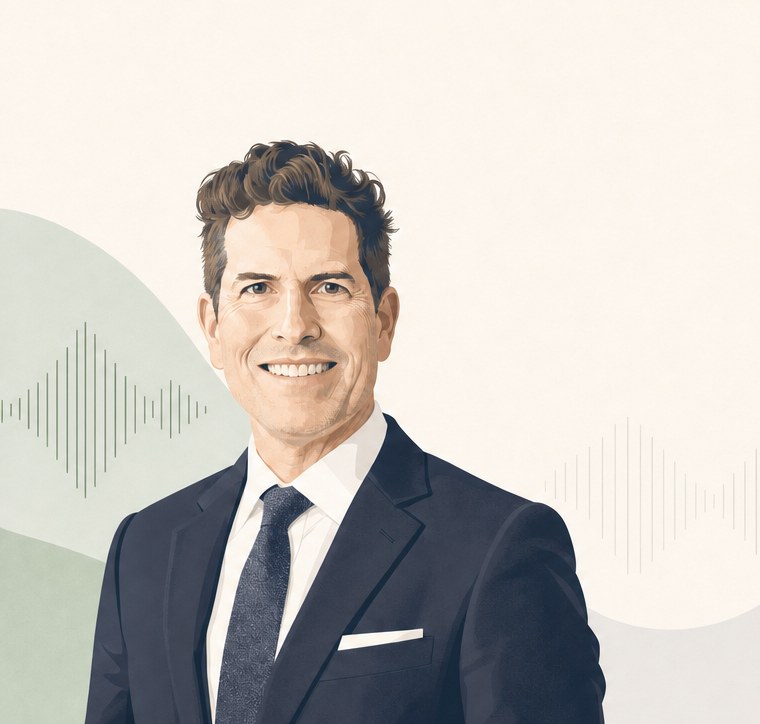
My name is Mark Leeds. I am an osteopathic physician, and I have practiced medicine since 1997. These days most of my work is helping people come off benzodiazepines and other psychiatric medications safely, and this podcast is where I talk about it. Here is how I got here.
Where I started
I began in family medicine, and over the years my work came to include two things that belong together: treating chronic pain with medication, which usually means a prescribed opioid, and helping people come off opioids when their bodies had come to depend on them. One is the way on. The other is the way off. I think of it like flying. Medical education teaches doctors how to take off, how to start a patient on a medication, and almost nothing about how to land. The pharmaceutical industry has never shown much interest in teaching the landing. Learning both halves, for opioids first, taught me how to bring a person off a drug their body expects without hurting them, and I came to see that as the right standard for any medication that causes dependence.
The problem nobody had an answer for
Many of the patients who came to me already on pain medication had also been prescribed a benzodiazepine by an earlier doctor, clonazepam or alprazolam or one of the others. What I discovered about those prescriptions was simple and troubling. There was a way on, and there was no accepted way off. Pharmacists, physicians, other prescribers, and the companies that made the medications had no adequate answer for how to help a patient stop safely and comfortably.
The answers I did see in those early years often did more harm than good. I watched people go to rehab and detox programs and get tapered far too quickly, and come out with immediate and long-term consequences. I saw doctors try to manage the problem with medications meant for other conditions, which left their own lasting damage. None of it was a plan. It was improvisation around a drug that nobody had been taught how to stop.
A patient handed me the answer
I listen carefully to my patients, and I always have. One of them asked me whether I had heard of the Ashton Manual. I had not. I looked it up that evening and read it the same night. There, laid out plainly, was a path: switch the patient to a longer-acting and milder medication in the same class, then give them the time they need to come down gradually, with few consequences or none. It was consistent with what I already knew from helping people off opioids, and it worked.
As I grew comfortable with the manual I found the rest of the field. The Benzodiazepine Information Coalition, the documentary Medicating Normal, and later the Maudsley Deprescribing Guidelines, which put the same approach into a textbook. I found myself drawn further into the world of benzodiazepine deprescribing, and over time the nature of my practice shifted until I was seeing more people for benzodiazepine dependence than for anything else. I have written about what the Ashton Manual says and how it is used today.
The work now
To this day I find it the most satisfying work I have done. There is no one-size-fits-all solution. Everybody is different, and every person’s problem has its own shape. Some patients present with benzodiazepine-induced neurological dysfunction, BIND, in ways that look nothing like the textbook, and the published resources run out quickly. When that happens it is up to me, with the patient as my partner, to work out the customized plan that brings them in for a safe and comfortable landing off the medication. Dependence is not addiction. Physical dependence on a prescribed medication is a predictable response of the body, and I have never treated it as anything else.
About this show
The Rehab Podcast began in 2018, when my work was mostly about opioids, alcohol, and the other drugs people become addicted to, stimulants among them, and those early episodes are all still here. The show now follows the same path my practice took. The conversations about benzodiazepines and psychiatric drugs are collected in the Benzodiazepines and Psychiatric Drugs series, and the full episode archive goes back to the beginning. I still find it a quiet pleasure to sit down with a microphone and a guest who knows something I do not. If you would like to be a guest, or you know someone who should be, please get in touch through the contact page.
This page and this podcast are for educational purposes only. Nothing here is medical advice, and nothing here creates a doctor-patient relationship.