Ketamine infusion therapy may be able to help eliminate suicidal thoughts.
Did you know that ketamine infusion therapy is used as a suicidal ideation treatment? IV ketamine is currently used for treatment resistant depression, bipolar disorder, anxiety, chronic pain, and suicidality.
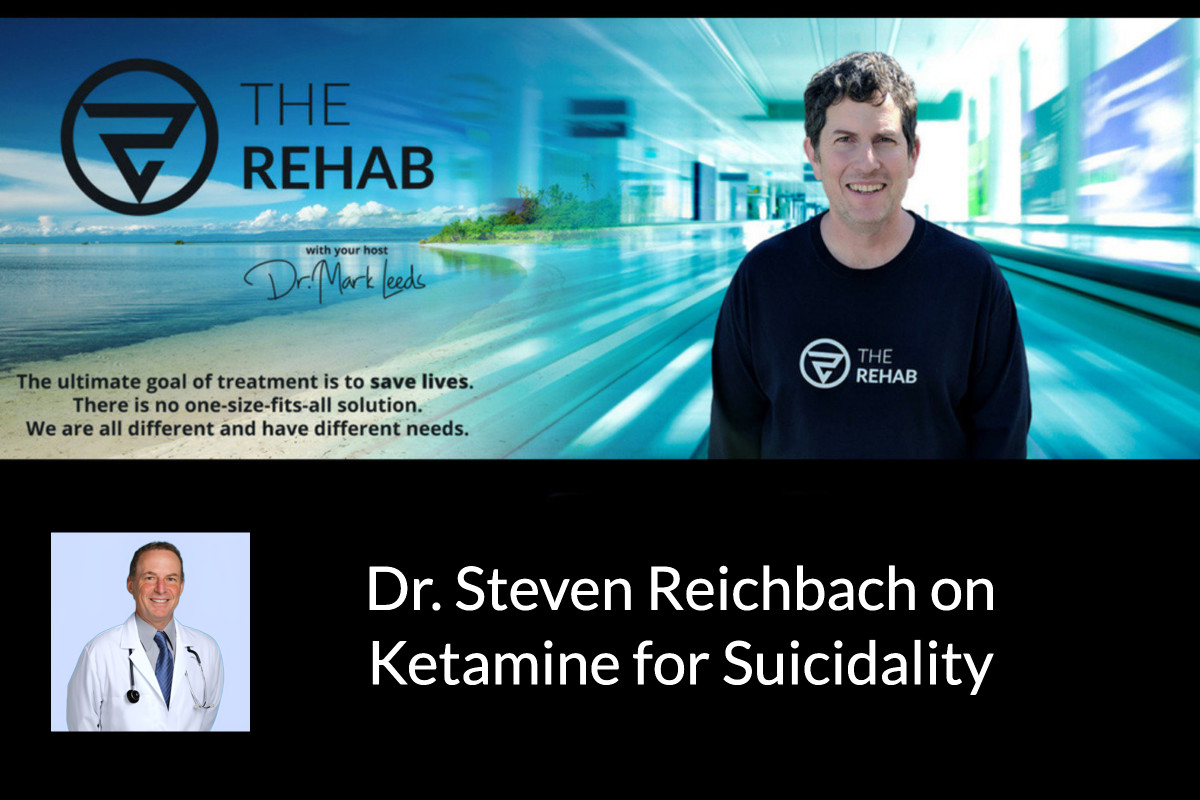
In my discussion with Dr. Steven Reichbach, we talked about a significant case in which a woman with severe depression and suicide ideation was treated with ketamine assisted psychotherapy. Ketamine patients treated for acute suicidal ideation are less likely to have frequent suicidal thinking.
Depressed patients suffering from severe suicidal ideation are able to go into suicidal remission. Ketamine treatment provides both rapid relief and lasting relief, long after completion of treatment at the ketamine clinic.
People with suicidal tendencies are often in pain. The pain could be physical, psychological, or emotional. Suicidal behavior is, in many cases, an attempt to end the pain, when the person sees no hope and no end in sight.
An example of emotional, or psychological pain is the pain experienced by a person with post traumatic stress disorder. The attacks of anxiety and stress lead to depressive symptoms, and sometimes a suicide attempt.
Read more: Dr. Steven Reichbach Discusses Ketamine Infusion Therapy for Suicidality
Please call the suicide hotline if you are having suicidal thoughts.
Any person with suicidal ideas should call the national suicide prevention lifeline, at 988. Suicidal patients with mental illness, mood disorder, or depressive disorder may benefit from ketamine treatment, especially if antidepressant therapy has not helped. But, the first priority is to ensure that the person is safe.
After calling the suicide hotline, and after seeking urgent medical and counseling assistance, a person might then consider long-term therapy to reduce the future risk of suicidality. Ketamine infusion treatments are particularly effective in combination with psychotherapy, referred to as ketamine assisted psychotherapy.
Additionally, ketamine infusion works well for patients with suicidality that is related to other conditions that respond well to ketamine treatment, including depression, anxiety, bipolar disorder, chronic pain, OCD, and addiction. Part of the solution is to address the underlying issues.
While IV infusion assisted therapy is effective, ongoing therapy and support is recommended. Psychotherapy takes time, and it can be a long-term effort to address deep-seated issues, and also to learn to better handle the stresses of daily modern life.
Can ketamine and medical cannabis work together, synergistically?
There are people who refer to the combination of ketamine and cannabis as “the God bomb.” While this term may imply more of a recreational, non-clinical use of these substances, there is certainly clinical application for both treatments combined.
In fact, Dr. Reichbach offers both medical cannabis consulting and ketamine infusion therapy in his practice. In our interview, he acknowledges the usefulness of both treatments in helping with similar conditions. Because of the therapeutic overlap, it stands to reason that engaging in both medical cannabis therapy and ketamine infusion therapy can help to overcome conditions that respond well to both treatments.
Should both therapies be applied simultaneously or alternately? For safety purposes, ketamine clinics may want to consider being conservative in this matter, asking medical cannabis patients to abstain from medical marijuana use on ketamine infusion days, or even during the entire ketamine treatment series period.
As clinic directors become more comfortable with both therapies, they may consider implementing different protocols utilizing both ketamine infusion therapy and medical cannabis. In Dr. Reichbach’s practice, he oversees ketamine infusions, and he is an anesthesiologist with over 30 years experience in administering ketamine intravenously. Contact us at The Rehab for more information.
Transcript (There are likely some innacuracies due to machine transcription technology)
Mark Leeds, D.O. [00:00:03]:
Doctor Steven Reichbach. Welcome. Welcome to the podcast. So, yeah, we spoke a while back, and, I remember you’re you’re an anesthesiologist by training, and and you’ve been working with Academy for at least 3 decades. Is that right? About 30 years?
Dr. Steven Reichbach [00:00:26]:
Yep. Been working with her for about 3 decades, and we’ve been specifically, treating patients for the last 8 years in our clinic. here, with ketamine intravenous ketamine to treat certain mood disorders and also certain chronic neuropathic pain syndromes.
Mark Leeds, D.O. [00:00:44]:
Yeah. You know, the one thing I’ve been hearing a lot about lately is how and I know it’s effective for a lot of things, especially treatment resistant depression. where antidepressants don’t work, but I I and I know it it works for a lot of different things, but I’ve been hearing great things about Academy for OCD for obsessive compulsive disorder.
Dr. Steven Reichbach [00:01:02]:
Yes.
Mark Leeds, D.O. [00:01:03]:
And, you know, just patients, you know, patients are coming out of of treatment just saying that the the symptoms are gone. They’re just They’re just not getting those, in intrusive, invasive thoughts and and repetitive actions and thoughts.
Dr. Steven Reichbach [00:01:17]:
Absolutely. There have been some small studies that have been done, using ketamine, relatively low doses, sub anesthetic doses, to treat patients with, with OCD and the, the results and the responses have been really, really impressive. I can tell you, anecdotally through our through our practice, you know, a lot of patients that we treat with severe depression, the anxiety disorders, trauma history. they also have underlying OCD. And one of the things that’s been really, really impressive to me is how that seems to be something that has helped a a great deal going through these infusions, even for those other diagnoses, that these intrusive thoughts, as you, as you mentioned, seem to feeling waning and, patients, the symptoms that they’re dealing with the, related to the OCD, seem to improve, you know, really relatively quick period of time.
Mark Leeds, D.O. [00:02:19]:
Yeah. Yeah. That that’s something that’s, I I think, really interesting. That that’s great that you’re able to see. You’re kind of able to do, like, an ongoing study of seeing, you know, when people come in for one thing, you can observe, like, what other things improve?
Dr. Steven Reichbach [00:02:33]:
Absolutely. Yeah. When we first started the practice, you know, most of the original studies using ketamine intravenous ketamine were done on patients with treatment resistant depression. And, when we started the practice, the the, the scope of patients that we were treating was much more narrow than it is right now. just by by having treated patients with treatment resistant depression and coexisting anxiety disorders, and usually there’s some history of significant trauma. and again, OCD and the the the branches of the tree just keep getting wider, seeing how these other symptoms seem to, wane and, improve, sort of has allowed us to to keep widening the scope of patients that we’re starting to treat with ketamine to see if it can help when when other treatments or other, whatever loads of therapy have not helped in the past.
Mark Leeds, D.O. [00:03:40]:
Yeah. It’s, yeah, it’s really, incredible just as, you know, and I think I think you’re just gonna keep discovering it more and more. And now I think The thing that we were gonna talk about today was related to to treating suicidality. And I think that that there was even a in an email that I got from your practice, like a description of a case of of a of someone who had had, you know, positive results of, you know, they were suicidal and were treated with ketamine and had a very good result. Yeah. Can you talk a little bit more about, ketamine infusion or ketamine treatment for a suicidality?
Dr. Steven Reichbach [00:04:14]:
Sure. I think I think the case that you’re alluding to was a a young woman, forty years old, came to the practice, with issues related to severe depression, suicidal ideations. and I The the main issue was her, the girl was she had been diagnosed with this, your chronic pain condition. She was diagnosed, years earlier with condition known as Cymbo mygilia and also multiple cirrhosis. And She was struggling with your chronic pain all day, every day, 10 out of 10, she was having trouble ambulating. She had extreme weakness in her outward extremities and lower extremities. And as a result of that, she was suffering with severe depression and suicidal thoughts, intrusive thoughts, so it was it was really a matter of we treat patients also, sciatic ketamine patients where the protocol is completely different. patients with certain chronic neuropathic pain syndromes. There’s a there’s a, at all, pain conditions will respond to ketamine but conditions that have a large central pain component compared to a peripheral neuropathic pain component. And, there is an entity or a condition known as CRPS or complex regional pain syndrome that, that, portion of the population will will struggle with. And it often goes undiagnosed in patients will describe symptoms of pain and very often, and I’ll have other diagnoses as well. and when she came to us, it seemed to me that, trying to deal with her pain condition, would help a lot, not only with, hopefully, with pain, but also with her mental her mental state at that point. And I was not clear initially as to whether she would the patient that would respond to ketamine, But after we started talking and I examined her, it became clear to me that she most likely had a diagnosis of CRPS or complex regional pain syndrome. which had not been diagnosed earlier. And a lot of times, patients can develop CRPS, from a preexisting condition. We see a lot of patients who’ve been diagnosed with Lyme disease and a large portion of them will, and the with a diagnosis of CRPS. A lot of autoimmune issues sometimes, can can solve in a diagnosis of CRPS, but generally it’s some sort of trauma usually to an extremity, usually after surgery or, you know, an injury or even a butt bite. In her case, it seems that this was sort of, a result of prior surgery related to these other conditions. and had it gone undiagnosed. CRPS is one of the big conditions that responds extremely well to to intravenous ketamine in relatively large doses. So, I use it oftentimes. CRPS is a diagnosis of exclusion, you know, you’re not gonna see it on X rays. You’re not gonna see it on on lab tests. It’s really a diagnosis based on on history physical exam and certain certain characteristics or manifestations that go along with it. and she she fit most of the criteria for CRBS. So we began, we began treating her with, higher doses of ketamine. And lo and behold, her pain level dropped almost immediately after the first infusion or 2. her allodynia, which is a very common manifestation of c CRPS, which is extreme skin sensitivity, even to very light touch. her upper extremities were somewhat discolored. They purplish intermittently. she had some swelling in her upper extremities, temperature changes, or temperature differences between the areas that are affected and the the areas that aren’t is there’s a differentiation there. Almost immediately, these these corresponding symptoms seem to improve as well as our overall pain level. She started sleeping at night, which she hadn’t been doing before. And, just it was almost it was almost miraculous. how quickly and how significant the improvement was. In addition, almost immediately, we do treat patients with suicidal ideations and major depression, which is a different protocol than treating patients with chronic pain. But almost in the same time frame, the depression seemed to lift. She had she described a feeling of well-being that she hadn’t experienced know, in at least 10 years, almost getting the elephant off my chest. The anxiety seems, abate quite a bit. And the suicidal ideation’s completely, completely, right away, almost immediately. so To answer your question, yes. They’re trying to figure out the protocols. They are completely different. When we’re when we’re treating a patient purely from a from a pain standpoint, I will use ketamine, as a diagnostic tool as much as a therapeutic tool. Oftentimes, it’s not as clear cut as we would like trying to figure out a diagnosis. So know that if a patient does respond to ketamine, there’s likely, there’s likely a a large central component to the pain. And what I mean by that is that pain almost emanates in the spinal cord of the brain as opposed to an actual injury affecting a peripheral nerve. So when the pain that patients come in with it and what they describe is out of proportion to anything that put our fingers on. doesn’t make sense. It’s it’s it’s getting worse instead of getting better. The presumption is that there’s probably a large central pain component, but and by administering ketamine, you can oftentimes sort of narrow, you know.
Mark Leeds, D.O. [00:10:27]:
That when you talk about that, complex regional pain syndrome, which, you know, they used to call RSD and, you know, and people, I mean, in in addition to being in this intractable pain, you know, for years, they couldn’t get relief. You know, they might show up to a pain clinic. The pain clinic says, well, where’s your your little back MRI. And I was like, well, there’s no MRI. There’s nothing you could see. And, you know, they say, well, you’re you know, you must be making it up because we can’t test anything, you know, just because you had a crush injury or whatever, you know, like, you know, there’s usually not not a test to prove the person has it. And, you know, and so they go you know, not only are they in pain, but, like, extreme pain. nobody believes them. And, of course, you’re gonna get depressed, and and a lot of people get suicidal. And, you know, and then, you know, some of these conditions, you know, the the for years, doctors with 12 patients, that’s not real, because I remember that with fibromyalgia, that all the doctors are saying that this is a made up condition. Nobody really has it. And then suddenly a big pharma comes out with a treatment indicated for fibromyalgia. and suddenly everybody believes it now. You know, it’s like, what happened? You know, just, 1,000,000,000 of dollars got thrown at it, and there’s some, whatever it was in SSRI or some kind of neurotransmitter type reuptake inhibitor thing. And and and now it’s a real condition with a diagnosis code, and we’re all we all believe it now. You know, so so the, yeah, it it is interesting how the medical, the health care industry is kind of controlled by the pharmaceutical industry. And here you are you’re providing a treatment that it it’s it’s all labeled. So so you have some flexibility that, you know, you’re not at the mercy of you know, has it been approved for some, you know, has the pharmaceutical industry blessed it with, you know, saying this is, you know, it it’s just it’s great that now people you know, in the old days, you know, you can’t go to a pain clinic because it’s it’s opioids. It’s, it there’s a stigma attached to that. And, of course, they are we now know they’re much more addicting than we thought they were before. But ketamine is I think it’s been around for, like, 50 years now, and we we know it’s safe. and we know, like, how it works and what it does. And you’re an expert. I know you’ve been doing it for 30 years. And now we’re seeing that these things that people have nowhere to turn before have some something they can do for it now. Absolutely. For sure. There’s actually just as an aside. I don’t know whether you’ve
Dr. Steven Reichbach [00:12:47]:
seen it or heard of it. There’s a wonderful documentary that just came out. related to ketamine and treating patient, a patient specific patient with complex regional pain syndrome with ketamine and pretty much everything. All the struggles and hurdles you just described. It just came out on Netflix. It’s all, take care of Maya, m a y a, and it is absolutely wonderful. So if you get a chance, I I would highly recommend taking a look at that.
Mark Leeds, D.O. [00:13:17]:
Yeah. Yeah. Definitely. I’m gonna look at that. and, you know, and that’s another great thing is that ketamine has you know, all all the benefits people are talking about these up and coming psychedelic treatments. We already have something Academy that does all the things that that we’re hoping for with, like, psilocybin and some of the other ones, but it’s been FDA approved forever. You know, it’s well understood. You know, the, you know, the research has been done already, and, you know, so so rather than someone waiting around for, you know, or going to try something that that’s risky, you know, here’s something that that you know, Anansky’s analogous. Yeah. Yeah. And and, yeah, it it’s it’s incredible. And Can you talk a little a little bit about the mechanisms? You know, like, they you know, there’s a mechanism of something to do with the neurotransmitters glutamate and GABA an anti inflammatory effect and also dendritic growth or neurogenesis. I mean, you know, so there’s some really interesting mechanisms. 100%.
Dr. Steven Reichbach [00:14:18]:
ketamine itself has been around, as you said, for about 50 years. It’s been studied extensively. for its antidepressant effects over the last 20 years, it’s been researched, it’s been studied. and the reason that it’s been shown to be effective in treatment resistant patients is that the thought is that the mechanism of action is completely and the SSRIs, SNRIs, lead stabilizers. What the ketamine is thought to do is really initiate, a series of chemical reactions in the brain after it lines to these NMDA receptors, which caused a flood of glutamate to be produced. The glutamate then binds to another receptor in in the parts of the brain. and the ultimate response is to release neurotransmitter or a peptide bond called BDNF Brain derived neurotrophic factor, which then, as you said, induces a strengthening of the dendritic spines, which are the connections between these neurons, proliferation of neurons in these root centers of the brain and these physical or hardwire changes that the ketamine induces, are thought to be what seem to correspond to relatively, fast or rapid improvement in overall mood lifting of depression, easing of anxiety. so we’re looking more towards the physical changes that it causes as opposed to trying to increase serotonin levels, dopamine levels, more epinephrine levels, which most of the, the oral medications are sort of geared towards doing. And these these physical changes that Academy has thought to induce, happen very quickly, you know, within 2 to 6 hours after an infusion, these these, these changes are starting to take place. So We are treating a patient with a mood disorder. We’re not having to wait 4 weeks, 5 weeks, 6 weeks to see if it’s even going to work. And if it doesn’t, we’ve gotta start with another medication and and wait another couple of weeks to see if that’s effective. With ketamine, you know, if you have a suicidal patient, know, you don’t necessarily have weeks to wait to see if a medication is going to to take hold. We’ll get calls from psychiatrists who on a refer patient who’s, you know, suicidal, who’s got a plan, who’s really in intent on on on on following through. And they basically say to me, we’re gonna we’d like to try this before we have to, you know, admit the patient for inpatient treatment and see if this helps. And and very often the majority of the time it does. And so that time factor can be be extremely valuable in these kinds of cases.
Mark Leeds, D.O. [00:17:05]:
Yep. So if if someone wanted to get started with this, and, you know, they wanna plan for it. You know, they wanna plan, like, you know, what do I have to do? because I I, you know, I know that, like, if you get a ketamine infusion, you shouldn’t plan do any more activities for the rest of the day or probably 24 hours, you know, as far as driving or working or anything like that. And, you know, that You know, so so you have to plan for, like, a day off, at least. And, like, how often, like, how many infusions would somebody usually get, like, for you know, typically, like, how often and how many would they would they likely need?
Dr. Steven Reichbach [00:17:40]:
Sure. So the protocol I follow is to do 6 initial infusions, and we try to do them within a 2 to 3 time frame. So the majority of patients will come to the office either twice a week over 3 weeks or three times a week over 2 weeks. the infusions last a minimum of about an hour. So when I say a minimum of an hour, we plan to do it over an hour. Majority of patients that go through ketamine. Academy is in a class of drugs known as dissociative drugs. So it is a mind altering drug, especially at higher doses. But even at lower doses, patients do experience mind altering effects to it. the majority of patients find the experience extremely warm and nurturing and transformative, and all of their questions are answered. They they feel that they’re benefiting from the experience as well as the actual physical changes that I’m that I was discussing before as far as being the research has shown to be the ultimate reason behind, ketamine’s effectiveness to treat these mood disorders However, there are patients, who don’t like that feeling of any kind of loss of control and your mind sort of going off in different directions that they can’t control. and for those patients, we’re very careful to to make sure that they are able to tolerate the infusion. Okay? If I was to give you, let’s say, 50 milligrams of ketamine over 1 hour, for the same 50 milligrams over 2 hours. Over 2 hours, you’re probably gonna feel more or less like you feel right now. There’s gonna be very little of any mind altering respect to it, very little association. but for me, the ultimate response is gonna be the same. It’s gonna be the 50 milligrams of ketamine that’s working on those parts of the brain to elicit these improvements. So patients that don’t wanna go through, any kind of, my Golden Association or anything that they don’t feel comfortable with, they don’t have to. And there’s a lot of disinformation out there patients with a lot of research. They’ll say, wow. I I I didn’t I didn’t, you know, I didn’t meet god or I didn’t I wasn’t flying through the sky with you know, watching rainbows, and I have to tell them that they don’t, you know, don’t have to go through that experience in order to get the benefits. It’s it’s really just the academy either doing what we’re not doing, what what hopefully we’re we’re hoping it does do.
Mark Leeds, D.O. [00:20:09]:
Yeah. And, now, someone and and so you said you you start with 6 treatments that might be around an hour or more. like, how often would they come in? Like, would it be, like, once a week?
Dr. Steven Reichbach [00:20:19]:
generally two to three times a week. Oh, okay. Yeah. We’ve we’ve done them for patients coming from further away. We don’t have the time luxury. We’ve done them on consecutive days. and we’ve done 1 a week over 6 weeks or over 4 weeks. But I think in a perfect world, try to do these infusions within a 2 to 3 week time frame most likely results in in a better, a better outcome response.
Mark Leeds, D.O. [00:20:47]:
Okay. So, yeah, so if a person is able to you know, if they’re working, if they can schedule a couple weeks off and and get it done and then And then there’s lasting benefits after that, in in many cases or most cases, if they are able to get they get through these 6 treatments in in a couple of weeks, you know, unlike, you know, the traditional antidepressants, it’s not something you have to keep doing every day or or or frequently.
Dr. Steven Reichbach [00:21:11]:
just as a sort of an aside, we do have patients who, who will come after work and an infusion. And, yeah, you could expect to be a little bit more lethargic and a little bit, you know, maybe cloudier in your head for a couple of hours after, and we the cell patients you can’t drive for 24 hours. But for the most part, by the next day, the majority of patients are pretty much back to baseline and they’re to go to work with us. so there there’s kind of different ways to, to handle the scheduling and and that kind of
Mark Leeds, D.O. [00:21:44]:
Okay. So a person doesn’t necessarily have to plan for for 2 weeks of doing nothing. They could probably just continue with their normal life and just, you know, do the treatment in the evening. Yeah. That that sounds good. I mean, it’s not you know, it’s it’s it’s a You know, now also I I how do you feel about, and this is a whole different topic, but, medical cannabis, you know, which is like a a whole different thing. It’s it’s not, not it’s legal and not legal at the same time. So, like, doctors don’t prescribe it, but doctor, at least in Florida, doctors are involved with it, you know, if recommending it or getting people registered. Like, how do you feel about that generally?
Dr. Steven Reichbach [00:22:24]:
Well, I I’m actually a proponent of it in in many instances, and we have a large number of our ketamine patients who have medical cannabis cards. Well, the types of patients that we treat sleep is often an issue, a major issue. And when patients or people who don’t sleep, it affects every aspect of their lives. If they’re in chronic pain, chronic pain is worse, they’re depressed and anxious. It makes the depression and the anxiety worse. and many of them have been on medications to try to help with sleep, and nothing’s really really done the trick, or they don’t wanna be on Xanax or follow-up in for the rest of their lives to to help them sleep because of the tolerance and the to keep increasing the dose. and I have found that cannabis can be extremely helpful. for helping with sleep. And I think that for for the right patients, and the right roots of administration, and for certain patients who deal with, you know, some anxiety at times, they think that medical cannabis can could be a real benefit to to a lot of these people, as well as patients in certain certain chronic pain conditions where they’ve been relying on opioids in the past and other more addictive type medications, medical cannabis. I think a lot of them has helped transition them off of other medications, more addictive medications, and helped, you know, preserve their liver and and kidneys, better than using a lot of these other medications. So I think under the right supervision for the right patients, medical cannabis is an extremely important tool for a lot of these patients.
Mark Leeds, D.O. [00:24:11]:
Yep. Yeah. I’ve noticed because I’ve I’ve worked with a lot of people who are tapering off of either benzodiazepines or other psychiatric medications that it helps with the tapering process and withdraw and and insomnia, you know, like you’re saying. And and it seems like it’s usually the I I don’t know what what the big difference is, but the the gummies, you know, where, I guess, like, where you know, you’re taking it orally and you know exactly what the milligrams are. you know, I remember a patient. She asked me, is it okay if I take a quarter of a gummy to help me get to sleep when when she couldn’t get to sleep? And it was definitely a lot as far as I I was aware a lot safer than pretty much anything I could prescribe to her.
Dr. Steven Reichbach [00:24:47]:
so — I agree with that. Yep.
Mark Leeds, D.O. [00:24:50]:
Yeah. So, yeah, it seems like that there could be some complimentary benefit of a person, who who goes for ketamine treatment, but also is able to benefit from medical cannabis if they’re open to that. Absolutely.
Dr. Steven Reichbach [00:25:03]:
I couldn’t agree with you more than that.
Mark Leeds, D.O. [00:25:06]:
So, Okay. Yeah. Steven Ryzhbeck. Thank you. Thank you for joining me today. and, yeah, how can people get in touch with you if they’re interested in learning about how to how to schedule a series of treatments or learn more about ketamine treatment?
Dr. Steven Reichbach [00:25:21]:
Sure. I’m here every day during the week. 8 to 5, 8 to 6. The number here is 941-213-4444. I’m happy to speak to to anybody, if they have any questions relating to ketamine treatment. If they’re a candidate, if they’ve just got questions out of curiosity, we have a website with a lot of resources and a lot of information. the website is info at findpainrelief.com. That’s also a good resource, something to look through if you’re interested in any of this. so, yeah, that that those are the the ways to get in touch if if patients would like.
Mark Leeds, D.O. [00:26:01]:
Oh, perfect. Dr. Reichbach, thank you again for joining me today.
Dr. Steven Reichbach
Thank you, sir. It was a pleasure meeting with you again.