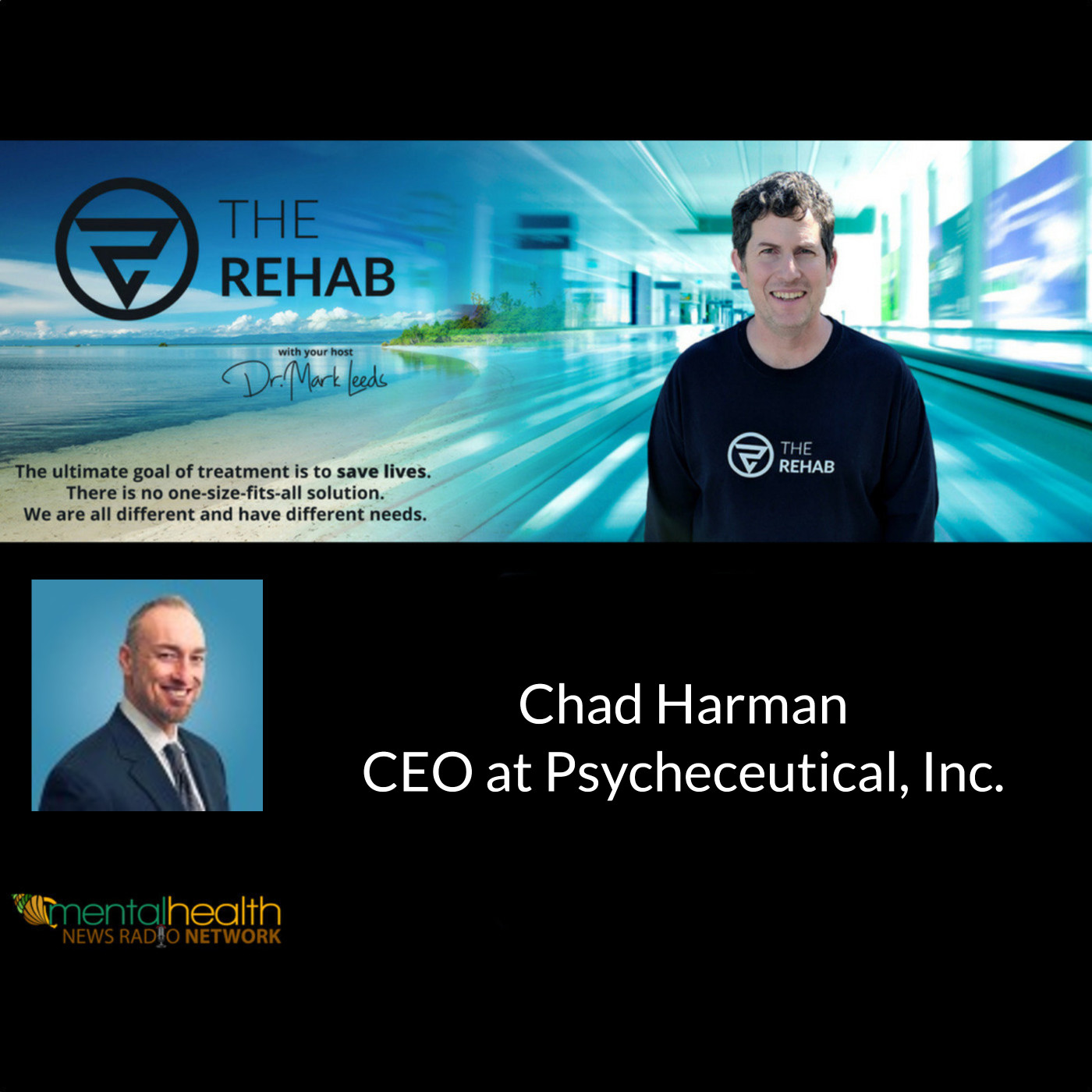
Chad Harman, CEO of the company Psychaceutical, on a revolutionary new topical ketamine product.
In this engaging episode, Chad Harman introduces us to Neurodirect technology, an innovative medical treatment invented by leading neuropsychiatrist and neurologist, Dr. Ronald Aungdon.
Renowned for conducting over 50 clinical trials and securing FDA approval for more than 30, Dr. Aungdon’s latest invention is transforming the delivery of neurological medications. Initially skeptical, I found myself drawn into the fascinating science behind the technology. As I learned more about its FDA approval, safety profile, and the profound impact it’s making in the field of medicine, my skepticism turned to intrigue.
Harman elucidates how Neurodirect technology enables the topical application of neuroeffective compounds at the nape of the neck, bypassing the systemic side effects usually associated with traditional neurological medications. The technology’s first patented application was with sumatriptan, a drug used to treat severe migraines.
Traditionally, oral administration of sumatriptan often resulted in lingering symptoms and took up to 45 minutes to work. But with Neurodirect, patients experience almost immediate relief and near-complete remission of symptoms within minutes.
The benefits of Neurodirect extend even further.
Dr. Aungdon has been utilizing this technology for topical ketamine administration, yielding promising results. A recent observational study published in Drug Delivery magazine reported that 80% of 100 patients suffering from severe PTSD and treatment-resistant depression responded positively to Neurodirect-delivered ketamine.
Harman also discussed the potential of this technology to address the current surge of anxiety and panic disorders, worsened by factors such as burnout among healthcare professionals during the pandemic. With its ability to deliver fast relief topically, Neurodirect technology could revolutionize patient care and herald a new era in the delivery of neurological treatments.
Episode Transcript:
Mark (00:03)
Chad Harmon. Welcome to the podcast.
Chad Harman (00:07)
Thanks, Dr. Leeds. I appreciate you having me. It’s an honor and pleasure to be here.
Mark (00:11)
Thank you. So you’re the CEO of the company Psychaceutical?
Chad Harman (00:16)
Yes, sir.
Mark (00:17)
So, yeah. Tell us a little bit about what you do there.
Chad Harman (00:21)
Sure. We’re a bioscience company, really focused on mental health treatments utilizing psychedelic medicines as our lead compounds. And with the revolution that’s happening with psychedelics, what we found is the primary issues that we’re seeing, Dr. Leeds, is really centered around dosage control for psychedelics. Obviously, they’re very profound. A lot of great clinical results have shown for the past several decades. But more precision, targeted dosing control is what’s needed for the industry. As you know, there’s a lot of profound effects from psychedelics, psychogenic effects, hallucinations, nausea, vomiting. So there’s many profound effects in terms of its therapeutic use, but in terms of the side effects, they can be not well tolerated for patients. So we have specific technologies that address those very issues, and so we look forward to bringing those through the FDA clinical trial pathway.
Mark (01:28)
Oh, wow. And when you say psychedelics, they’re all a little bit different, everything from LSD to Psilocybin, MDMA. What are the other ones? Ayahuasca Ibagaine ketamine. Each one has its own unique properties, and maybe different ones are useful for different conditions, or better for one condition than another. Which ones are you primarily working with?
Chad Harman (01:56)
Yeah, I mean, we’re really focused on ketamine as our first drug, taking it through the clinical trial pathway. We chose ketamine because it is very profound in terms of its utility and use when it comes to PTSD, depression, anxiety, and it’s a schedule three drug, so we know it’s well tolerated. And a cool fact is one of our technologies, Janus Particle, it’s licensed from the University of Michigan, and that’s where they first synthesize ketamine. So it’s kind of a full circle there. And so what we found, Dr. Leeds, is one of our other technologies, neurodirect. It has very profound effects to alleviate a lot of the side effects that we just discussed. And so because schedule three drug can be used in a clinical setting, it’s a faster path through the clinical trial pathway versus going to MDMA, psilocybin, LSD, all the other psychedelic compounds. So for us and our investors, it was a huge target going after PTSD using neurodirect for ketamine. But it also represented, again, a means to move forward in a very expedient format using ketamine. But we certainly look forward to looking at the other molecules specifically. MDMA is another compound we’re interested in psilocybin and then some others to treat addiction disorders.
Mark (03:35)
Okay. Ketamine, I don’t think you can take a ketamine pill. I don’t think it can be absorbed significantly through the gastrointestinal tract. So you have these ketamine clinics doing intramuscular and IV ketamine treatments. What are you guys using to get ketamine into the system in an accurate way?
Chad Harman (04:01)
Sure, that’s a great point. Let’s do a little contrast. So existing treatment, as you mentioned, is IVIM. There is bravado, right? Jensen Pharmaceuticals has an intranasal drug that they’ve developed. All those are administered in a clinical setting, and it’s very expensive, right? You’ve got not only the doctor costs, there the drug itself, and then you also have all the monitoring as you go through the experience. Patients in the traditional oral or systemic administration of those compounds you just mentioned comes with psychogenic effects, oftentimes GI, irritability. So oftentimes you’ll have to deliver, like Zofran, for instance, as an anti nausea medication. And then you’re going to have to monitor the vital signs, blood pressure, and again, on the back end, there is some severe lethargy. And then patients have to be oftentimes driven to and from those appointments. So it’s a very cumbersome way of administering ketamine, obviously very profound effects from that, but it’s a very expensive cost of care model. And so what we’re going to be doing is we have a topical administration of ketamine, which is new. And so what we’re doing is completely instead of using a systemic format of delivery, we’re using what’s considered a non systemic, meaning it’s not going into the bloodstream, we’re not going through the circulatory system and having issues with GI system or profound psychogenic effects.
Chad Harman (05:45)
And so with the Neurodirect technology, it was invented and created by Dr. Ronald Aungdon, and he is a neuropsychiatrist and neurologist at Sarasota, Florida. And he’s been a part of 50 clinical trials. Well over 30 of them have gone on to FDA approval. And so, in his practice, what he was looking for, Dr. Leeds, is the ability to bypass a lot of the systemic side effects of traditional neurological medications. And so what he found was that if he placed a neuroffective compound in a topical cream format at the back of the neck, at the hairline, and only that spot on the body, he found profound effects. And so meaning that his first drug that he brought to market but he patented was for sumatryptin, for severe migraines. And what he found is, in an oral setting, they would dose in an oral administration, and if they didn’t catch it immediately, there was a lot of symptomology remaining. So it often took 35 to 45 minutes. And those patients often just didn’t see the relief that they were looking for. So with the Neurodirect delivery platform, they’re able to dose immediately, get effects, and almost complete remission of symptomology within several minutes.
Chad Harman (07:15)
So now take that same administration, you take it into the IV or you take it into ketamine, and with a topical administration within several minutes. And he’s been dosing patients with the neurodirect ketamine in an off label format for the better part of a year and a half. And it was actually just quoted this month in Drug Delivery magazine. It was a peer reviewed approved article that showed him taking 100 patients. And he did an observational study, and there was quantitative measurable results that showed that 80% of the patients with severe PTSD, treatment resistant depression, patients that really didn’t have any treatment model whatsoever, any relief, and 80% of those patients responded favorably. And so for us, that’s a huge benefit. And to patients, it’s a new way of delivering neuroffective compounds safely and effectively and getting them the relief without all the other side effects. Matter of fact, what we’ve heard from many doctors around the country clinicians, our medical advisory board member, Dr. Julian Bales, who runs ten hospital and clinics there in Chicago, said during the pandemic that more and more that we’ve got physician and nurse burnout. We have patients coming in that are seen weeks, if not months, before they can see therapist.
Chad Harman (08:56)
And so we’ve got this rise of epidemic proportions of patients that need relief from these severe anxiety, panic disorders and this disruption. And he and many others say, hey, if we can go in and deliver this topical administration ketamine, start to have a dramatic reduction in overall symptomology and then start to triage and treat these patients in a remarkable manner, this is going to be very profound for the entire industry. So, again, we’re not going in systemically. There’s no patch, we’re not going to the bloodstream. So this is a completely new route of administration that we look to have as a breakthrough delivery technology.
Mark (09:40)
Okay. I was thinking with topical creams when I saw ketamine cream, there was a years ago, there was a company that I think it was like a local compound pharmacy, but they created a product. And the interesting thing was that their marketing was to make them kind of look like a pharmaceutical company. And they had a guy that came in that he was like a drug rep, and he brought samples of it in. And I think going back a little further, maybe 15 years ago, plus or minus a little, I remember compound pharmacists getting really excited, telling me, we have this new delivery system that gets medications across the skin and it was Liposomal something or other, whatever this stuff is. And suddenly there was this explosion of pain creams. We were getting like, these flyers, like, all the time, nonstop from pharmacy, saying, here’s a pain cream with this stuff and this stuff and almost anything you think of that might help with pain. There was like an anesthetic, an anti inflammatory, a muscle relaxer, just a blend of stuff. And the one ketamine one I was telling you about, they had a list of stuff also, but they were putting like 25% ketamine, which was like a lot for those kind of creams.
Chad Harman (10:49)
Wow.
Mark (10:50)
Yeah. Then later I found out, like, the the proper dosing probably should be starting at five, maybe two to 5%, and then maybe 10% at the upper limit, 15%. But these creams, they were intended to go wherever you have pain. If you have pain in your leg, you put it on your leg. If you have pain in your lower back, you rub it in your lower back. There’s some doctors that were really excited about that. So is this not the same thing as those kind of muscle pain creams and those kind of things? Is this a different kind of a delivery system?
Chad Harman (11:24)
Sure, yeah. I mean, it certainly can handle pain. I think what we have is specific to the location and where it’s administered. So we have a method of use patent that precludes or prevents individuals from applying any compound at the back of the neck of their hairline. Basically, that c four area. So if anybody markets or sells that specific area on a drug label or tells an individual to apply it there at that region, then that infringes on our patent. From the standpoint of looking at pain, we certainly see a lot of symptomology that we’re able to handle as part of our technology. But again, what we’re going after is PTSD, which, you know, some of the comorbidities are often pain sleeplessness. There was a whole host of other indications that go along with PTSD. So for us, what we know and what we’ve documented is that when they place at the back of the neck of their hairline, those that have severe anxiety, severe anxiety, panic disorder, they’re getting immediate results within minutes. So more of the mental health disorders. We are looking at crypts as another indication to go after. And we’ve seen 25 patients have immediate response to the administration.
Mark (13:10)
Yeah, and I should point out there’s compound pharmacies that do all kinds of crazy things with what they have, and that doesn’t necessarily make it a good idea. Like you had mentioned, Spravado, the nasal spray that has the acetamine isomer in it, and it’s very strict. I looked it up to see, could I administer this at my office? You have to register the pharmacy, the doctor, the patient. It’s a very thorough system to make sure that everybody is safe. And then there’s a compound pharmacy like, oh yeah, we’ll make a nasal spray. Okay, well, hopefully everything goes okay with that because FDA approval does mean something. And the other thing is, insurance typically doesn’t want to pay for off label things, so that’s another benefit. But, yeah, I think when it comes to safety, there are people that do definitely want to stay on the path of, like, I’m only going to do what’s been approved by the government for this particular use. It’s a scary thing when you find out these doctors doing epidural injections that none of that is I don’t think any of those are FDA approved. It’s like, what are you even shooting into me?
Mark (14:19)
Where’d you get it from? Did it come from a compound pharmacy? A real pharmaceutical company? So there’s something to be said about things being done through the appropriate pathway.
Chad Harman (14:33)
What I would say to that as well is more than now than ever, especially when we consider the mental health space and the epidemic proportions that we’re at today, more so than ever. And the statistics are out there that show more than 60% is where we’re at. Based on some studies that our frontline doctors, like our general physicians, nurse practitioners, physician assistants, are prescribing these frontline medications, SSRIs. And again, we know that stats tell us that 30% of the respondents actually have some type of relief from these. And again, it takes six weeks. What we wanted to create, Dr. Leeds, is something that handles a big issue and need and challenge not only for patients, but also for our frontline doctors and therapists to give these patients immediate relief. I mean, suicidal ideation is on the rise as well. And so we’re seeing these people suffering left and right, and we need to provide those tools for our frontline doctors. And this is something that, again, you’re not having to register in a clinical setting or with pharmacy. This is something that these frontline doctors can write the script and these patients can get immediate relief.
Chad Harman (15:55)
So that’s what we’re very excited about and differentiated from everybody else in the industry, right?
Mark (16:01)
Yeah. So that’s a huge thing, because like I said, when I looked up, how can I give a patient spravado? It was just there’s no way I’m going to go through all that. So then the next step is, like, do I want to send the patient to an academy clinic? I mean, I don’t know. I don’t really know. The clinics around here, they’re popping up everywhere, and it’s a little bit scary saying, okay, go get an IV at this clinic. So you’re saying that this is something that would a doctor order it or they would write a prescription and they go to a pharmacy and pick it up, and do they bring it back to the doctor to get it administered? Do they do it at home? I mean, how does it work? Like, if a primary care doctor wants to get involved with this?
Chad Harman (16:41)
That’s a great question. Yes, they would write a script. The patient would pick it up. And this is the great news. Again, it doesn’t have to be administered in a clinical setting. You don’t have to have a therapist present for any of that. So patients would be able to dose on the job at home. Dr. Ongdon has even had patients that have severe anxiety or panic attacks when they get into crowded spaces or they’re on the freeway and there’s a ton of traffic, and they’re stopped patients being able to apply that cream within minutes, several minutes, and they’re getting relief. They’re really able to calm the nervous system. And for many of these patients, they’re saying I’m able to actually gather and collect my thoughts and have this moment of clarity that I have not had in years or even sometimes decades. That relief, which has been so profound and it’s been very emotional for Dr. Ongman to see that with his patients have that relief within minutes of administering. So, again, this is something that will change how we can administer that. Again, we’re not waiting six weeks with traditional SSRIs to take hold to see if it’s going to work or not.
Chad Harman (17:56)
And as you know, Dr. Leeds, many of these Sris are administered, and then oftentimes they’ll start to lose their effectiveness over time, and then you’ve got to switch them to something completely different here. So what we hope and anticipate through the clinical trials is these patients are getting relief and then they can taper off. And it’s really as an as needed basis that they be able to use this medication.
Mark (18:23)
Yeah, I think that’s something that people are becoming very much aware of, that based on new reports and studies and discussion of it, that the SSRIs are not. And a lot of the antidepressants, a lot of these things are not what we thought they were. They’re minimally effective. They have a lot of side effects. They’re probably not safe for long term use. They need to be tapered off very carefully. And the companies that make them didn’t really give anybody any instructions on how to do that. So there’s just a lot of negatives Ketamine. When you look at the package insert, the product information from the FDA, of all the things to look out for, it’s a very short document when you look at it. I forgot what the brand is. It’s like a brand of Ketamine, I think. Kevlar. You look at that product information, you’re like, well, where’s the rest of it? It’s like very short. There’s not a lot there. Then you look at any SSRI and it’s like page after page of adverse effects and side effects and black box warnings. I think Spravado may have some black box warnings, but that’s a different kind of Ketamine.
Mark (19:30)
That’s s ketamine. But yeah, the old traditional Ketamine, there’s just very little there to worry about, relatively.
Chad Harman (19:36)
Yeah. And one other thing I do want to comment on, too. When we look at Ketamine, we look at just psychedelics in general. We’re going to carve out a substantial patient population as well, right? We’ve got adolescents now more than ever. I mean, case in point, right? Recent news is a Nashville shooting, right? We had a 28 year old go in and start shooting up. We’ve seen teenagers with the Yuvaldi situation last year with these shootings, we’ve seen more and more suicides happen, more in adolescents, more so than ever coming out of post pandemic. And then we’ve got as we think about the patient population for psychedelics, we’ve got the senior population, and then we have those that are opposed to having a psychogenic effect, and then we have those individuals that just would not qualify due to medical conditions. So with our mode and our delivery, we open it up to all those various populations. Right. There’s no psychogenic effect, so adolescents are going to be able to potentially get the relief they need with our solution, senior. And again, we’re going through phase one and phase two trials here shortly in Australia. And so what we hope to see and what Dr.
Chad Harman (21:00)
Ongniz has seen is that there’s no what we’ve what he has seen in the office is an actual reversal. With Ketamine, there’s the spike in blood pressure that occurs, so cardiotoxic effects can take hold. And is one of the side effects well, what he has seen is actually because it’s so antianxiety Ketamine, we’ve seen a reversal in the topical administration to see that it start to normalize blood pressure levels. So now we’re starting to really encompass everybody in that patient population. So we’re not hopefully going to have the ability to be able to dose anybody and everybody. Right.
Mark (21:43)
Okay. And I want to go back to something you mentioned. If someone is having a lot of anxiety because they’re stuck in a traffic jam, if you go to academy and clinic, they tell you you can’t drive. You need someone to pick you up at the clinic and drive you home in 24 hours. No driving. So there’s no restriction with this?
Chad Harman (22:02)
No, not with what Dr. Ongdon has seen. And again, we have not seen any systemic absorption. So by what we’ve gathered or what he has gathered and collected, it can be taken anytime, anywhere, without any side effects. Again, here’s the good news, is many of these patients are on a multitude of drugs, whether it be SSRIs or benzos. And so there seems to be no drug interactions whatsoever. So patients can start to really wean off those other drugs. As you know, it can be very detrimental. Weaning off some of these SSRIs and can create a lot of issues. And so what Dr. Ongo has seen is many of his worst case patients, they’re on several drugs. They’re able to wean off a majority, if not all of them, and just remain on the neurodirectamine.
Mark (23:04)
Okay. Is this something that we’ll be able to get, for example, at Walgreens?
Chad Harman (23:10)
Yes, that’s what we’re going through that process with the FDA.
Mark (23:15)
Yes. Okay, so it’s not like a specialty pharmacy. It’s, like, pretty much your neighborhood corner pharmacy, whether it’s one of the big chains or independent. Okay. What is the manufacturing with this? I don’t know how that works, but I know people. When you go into one of these compound pharmacies, at the best, they may have, like, a little lap behind a glass window, and there’s a guy mixing stuff up and you hope he’s having a good day and whatever, but you guys are kind of probably equivalent to a real pharmaceutical company. We have these companies, and I know there’s one in Florida, like IVAX or something in Miami, that they make a whole bunch of generic drugs and whatever, but that’s a whole different thing compared to a little pharmacy making stuff.
Chad Harman (24:05)
Yeah, it’ll really go to a CDMO. It’ll go to much similar to a large pharma company like Lily Johnson and Johnson. So it’ll go to an FDA CDMO where they will make sure that it’s following strict guidelines in terms of making sure the product is shelf stability, that it is consistent in terms of oral quality. It is going to be in a FDA approved metered dose bottle. So every pump will have the same milligram dosage for each pump. So all of that will meet FDA standards. And to your point, it’s not going to go to a specialty pharmacist going into their little lab and, oh, well, I’ve got a tolerance of 15%, so if I’m off a little bit, we’re okay. Now, this is going to be to strict pharma guidelines from a manufacturing standpoint. Great question.
Mark (25:03)
Yeah. When you mentioned the pump, that’s a really popular way to get testosterone. I have some patients that use those testosterone cream pumps, and they have the little packet ones that are hard to deal with, and then they have the injectable that nobody wants to do. But I have several patients that just love the pump. It gives you that exact meter dose, and they put it on whatever area they’re supposed to put it on. It’s really a great way to administer a topical medication.
Chad Harman (25:32)
Yeah, absolutely. I think for us, too, and for your audience as well, is kind of going beyond even just the general doctor situation. I think I touched on it a little bit, but where I think we’re going to be very remarkable in terms of its uses moving forward, too, is, again, going into emergency rooms, urgent cares. We even envision some of our first responders. So more of our EMS, our firefighters, and our police force. Being able to provide this as a potential tool while individuals would be in a hysterical mode and trying to triage patients in that manner is very difficult, as you know. So we envision this even going beyond just a normal doctor setting to now encompass more of front line. All right, we’ve got immediate patient in a hysterical mode. Let’s calm the autonomic nervous system down. Let’s be able to triage this patient. I think that’s going to be certainly something very different, again, than anything else that we have treating severe panic attack, anxiety disorders that fight or flight mode.
Mark (26:54)
Yeah, that’s really great because there’s not a lot of good stuff out there. Like, we talked about the SSRIs, and now we know, as of just a few years ago, the benzodiazepines are toxic. They’re definitely not for anything more than just very short term use. And when you give someone with anxiety benzodiazepine, like Xanax, Clonapan, Adapan, they get used to it really quickly. They’re like, wow, this is great. Keep giving me more. And then they get stuck on it and they get really bad toxic brain effects. It’s hard to get off of. So we would rather not start people on them in the first place. But there’s not a lot of good alternatives. There’s antihistamines and there’s a couple of things that just don’t work very well or they’re also not very safe. But it sounds incredible. You’ve taken something that we already know is safe and effective and proven for decades and put it into a packaging and a way of administering it. Another thing that comes to mind is a lot of people talk about micro dosing with the psychedelics, although none of them are really legal, but I hear people talking about micro dosing with psilocybin, taking below the amount that would have any kind of noticeable effect, but they still feel like there’s some benefit from it.
Mark (28:06)
Then you hear about Hollywood people and celebrities take micro dosing LSD, and taking something far below what they would get a psychedelic effect from. So it seems like you’re actually bringing some of those benefits to the market. You may be the first one out there. There’s companies talking about someday when Psilocybin is legal, we’ll have a thing for it, but you’re already on the path. How soon can we expect to see this?
Chad Harman (28:34)
Yeah, so we’re going through Phase One and Phase Two trials in Australia, as mentioned earlier. So phase one is commencing May 1. And then in Q three early Q four, we’re starting phase two. And so what we expect is that’ll take about a year and then in parallel we’ll be working on our Phase Three. So 20 to 25 time frame. So it depends on obviously the results of Phase Two, where we land there. But given the remarkable results and 80%, which is far above what we would consider acceptable by the FDA standards, we feel like this would be certainly we can fast track with the FDA because of reducing or alleviating, all the side effects and showing increased safety profile. So what our FDA regulatory consultants have said, hey, we can apply for that fast track. And so sometime in 2026, 2027. Again, these are all estimates and based off of some of the experts that we have in our corner. So again, we’re going to put as much pressure as we can. We know that the patient population needs us, our frontline doctors need it more so than ever. So we feel like we have something that’s very valuable.
Chad Harman (30:03)
And again, the VA, one of our patent holders is a former Navy Seal. He is very tied in with the VA. We’ve got a lot of political ties at Congress and with our four star generals. And so we’re going to put as much political pressure as we can because of the safety profile that we’re bringing to the table, because there’s a lot of anecdotal evidence to support it. And certainly once we have the Phase Two, so we’re going to press on every single lever we can to get this in consumers hands as fast as we can.
Mark (30:40)
That’s great. Yeah. I’m sure people who are going to be listening to this podcast are probably going to think, I wish this was already out there, I wish the doctor could write the prescription. And we’ll be looking online at your website for the little discount card like the trial one that we can start out with and everything. But yeah, it’s exciting to see a real product coming to market that’s filling this void. There’s really nothing like it out there.
Chad Harman (31:06)
Yeah, absolutely.
Mark (31:10)
Okay, Chad Harmon, thank you for joining me. And we’re really excited about hearing what happens next with Psychutical. Sorry, what’s the name of the product? Is there a name for it yet?
Chad Harman (31:21)
Yeah, it’ll be Neurodirect Ketamine is what we’re calling it now. Obviously, once we get to phase three, we’ll call it something different. Right? A more pharma type name. So I’ll let the marketing experts figure that out.
Mark (31:36)
Thank you again for joining me.
Chad Harman (31:39)
It’s honor and pleasure and I appreciate it.